The theme of International Women’s Day 2026 is “Give to Gain.” In that spirit, let’s explore the patent archives to uncover women inventors whose contributions have influenced everyday life.
Throughout history, women have shaped industries, not always through dramatic breakthroughs, but rather through practical solutions to problems they encountered in their daily lives. Many conveniences we now consider ordinary were first imagined, engineered, and patented by women who believed there had to be a better way.
From cleaner kitchens and safer buildings to clearer windshields and wrinkle-free clothing, here is a chronological look at patents by women inventors whose ideas quietly became part of everyday living.
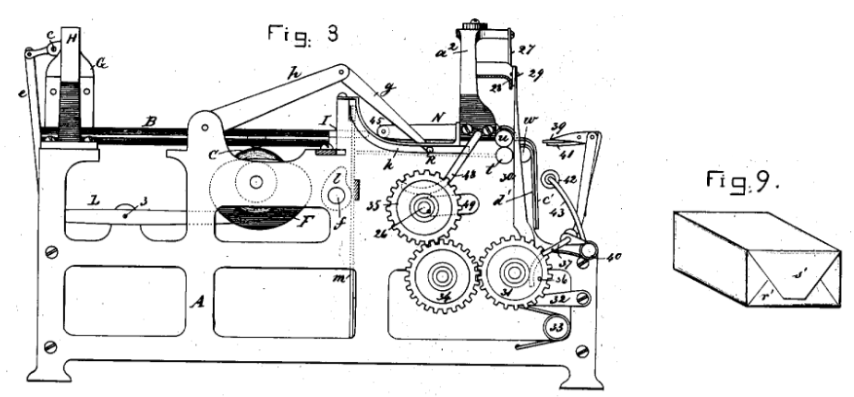
Margaret E. Knight’s Paper-Bag Machine (1880)
Margaret Knight’s invention, USRE9202E, disclosed a machine that enabled the mass production of flat-bottom paper bags that could stand upright and carry heavier loads. The mechanism automatically folded the paper to create a diamond-shaped fold, forming the structural base of the flat-bottomed bag and producing self-supporting bags suitable for retail and grocery use. Her invention reshaped packaging and retail operations worldwide and remains foundational to modern paper bag manufacturing.
(Click on the image to view the original patent illustrations for technical reference.)
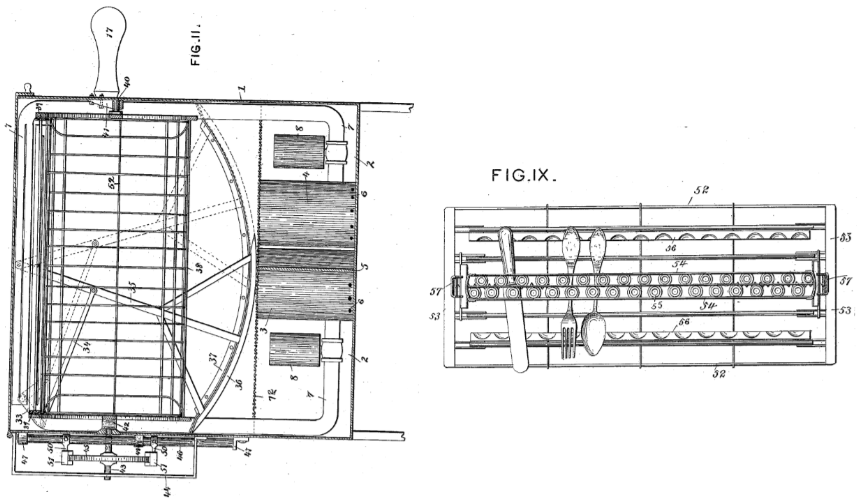
Josephine G. Cochran’s Dish-Washing Machine (1886)
In US355139A, Josephine Cochrane mechanized dishwashing using water pressure rather than manual scrubbing. Her system directed a continuous stream of hot water and soapy suds onto dishes secured on a rotating rack, followed by hot rinsing water that left them clean and dry from their own heat, eliminating the need for manual drying. What began as frustration over chipped tableware became the foundation for the modern dishwasher and permanently changed kitchen efficiency.
(Click on the image to view the original patent illustrations for technical reference.)
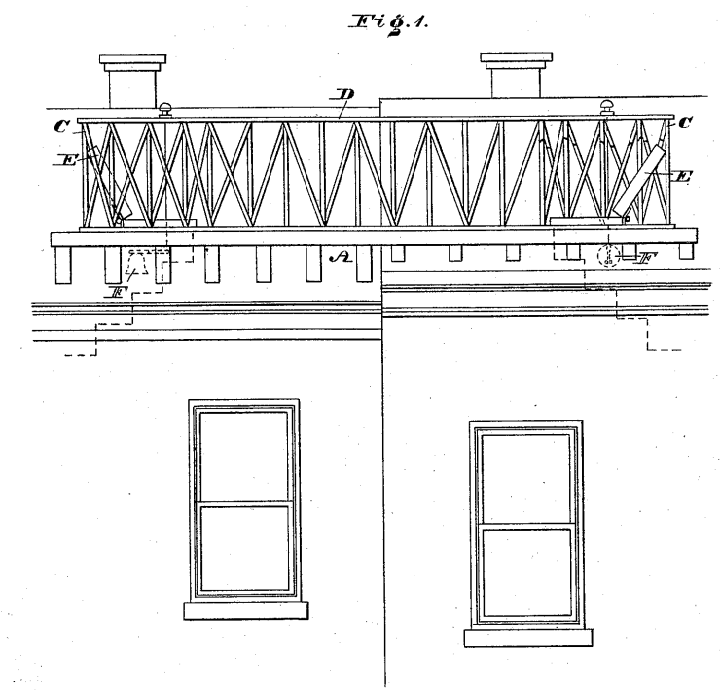
Anna Connelly’s Rooftop Bridge Fire-Escape System (1887)
Anna Connelly’s invention, US368816A, disclosed a bridge-based fire-escape system connecting adjoining buildings at the rooftop level. Her design featured a railed bridge secured across adjacent roofs, with guarded floor openings aligned with each building’s scuttle to allow direct access. By enabling escape from one structure into a neighboring building, the invention addressed urban fire risks in densely built environments and introduced a practical cross-building evacuation solution.
(Click on the image to view the original patent illustrations for technical reference.)
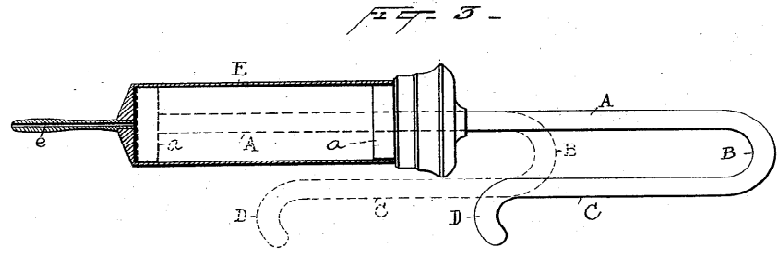
Letitia Mumford Geer’s Single-Hand Operable Syringe (1899)
Letitia Mumford Geer introduced a syringe in US622848A, configured for single-hand operation. By integrating the barrel and plunger design to allow controlled injection with one hand, the device improved precision and ease of use during medical procedures. Though mechanically simple, this refinement became fundamental to modern syringe functionality and clinical practice.
(Click on the image to view the original patent illustrations for technical reference.)
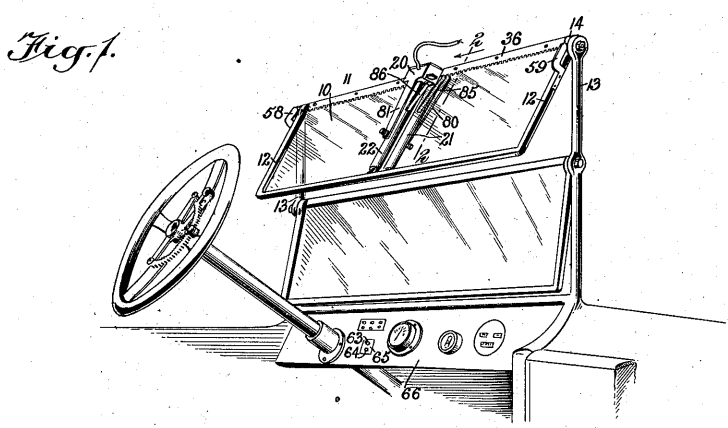
Charlotte A. Bridgwood’s Electric Windshield Cleaner (1918).
In US1274983A, Charlotte Bridgwood introduced a motor-driven cleaning device featuring a carriage that traveled across the windshield on a fixed track. Powered by a reversible electric motor and rack-and-pinion drive, the carriage carried wiping elements that cleaned both sides of the glass and automatically reversed direction at the ends of its path. Operable from inside the vehicle, the system provided continuous, hands-free clearing and marked an important step toward modern automated wiper systems.
(Click on the image to view the original patent illustrations for technical reference.)
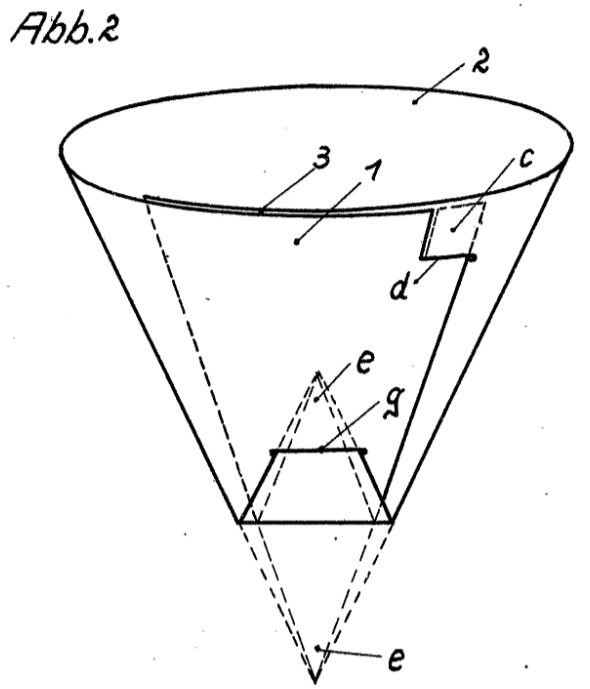
Melitta Bentz’s Filter Paper Insert for Coffee Brewing (1937).
Melitta Bentz, frustrated by coffee grounds settling in her cup, famously improvised by using a piece of blotting paper from her son’s notebook as a filter. Her patented design, DE653796C, transformed this idea into a semicircular sheet that was divided by crease lines into three sections and folded into a bag shape, secured with a tongue-and-slot mechanism to hold the overlapping layers and the folded tip in place. That simple experiment evolved into a practical disposable filter insert that reliably separated coffee grounds from the brewed beverage.
(Click on the image to view the original patent illustrations for technical reference.)
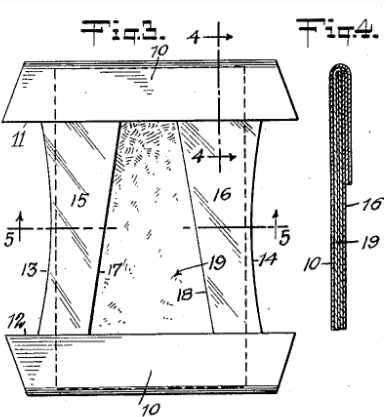
Marion Donovan’s Leakproof Diaper Wrap (1951).
In US2556800A, Marion Donovan introduced a diaper wrap formed from a soft plastic sheet that secured both the diaper and its waterproof covering in a single step. Side flaps folded over the diaper’s edges, and the ends were bent inward to create a compact, enclosed unit that reduced leakage and kept moisture away from the baby’s skin. By simplifying diapering and eliminating the need for separate rubber pants, her design paved the way for modern disposable diaper systems.
(Click on the image to view the original patent illustrations for technical reference.)
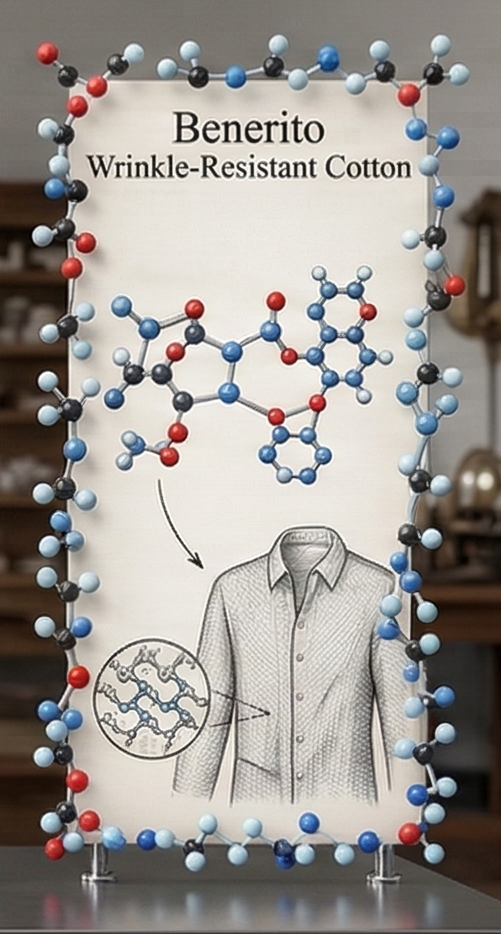
Ruth R. Benerito’s Wrinkle-Resistant Cotton Fabric (1965)
In US3432252A, Ruth Benerito introduced chemical treatments that cross-linked cellulose molecules within cotton fibers, enabling fabrics to resist creasing while maintaining strength and durability. The treated fabric retained the essential qualities of the original cotton, including its tear strength, color, appearance, softness, and natural feel. This innovation contributed to the rise of wash-and-wear clothing and significantly reduced the need for ironing, changing everyday textile care practices.
These inventions share a common trait: they solved real problems with such clarity and effectiveness that they became woven into the fabric of everyday life. Each patent represents insight, persistence, and technical creativity applied to practical needs. This International Women’s Day, we celebrate the women inventors whose patents didn’t just advance technology, but quietly made life cleaner, safer, easier, and more comfortable for everyone.
Sometimes, the most powerful innovations are the ones you stop noticing altogether.