


Search
Close this search box.

Weird Thanksgiving patents: How everyday problems inspire extraordinary inventions

LinkedIn
X
Email

A Thanksgiving Feast of Questionable Genius

Thanksgiving is the one day of the year when we gather around a table and collectively agree that a large, awkward bird is the pinnacle of culinary achievement. What most people don’t realize is that while the rest of us were just trying not to burn the rolls, a small army of inventors was busy patenting solutions to problems you didn’t even know you had.

Here is a loving (and slightly judgmental) tour of the Thanksgiving patents that prove human ingenuity knows no bounds especially when there’s gravy on the line.

The 1950s turkey loaf and canned roast patents

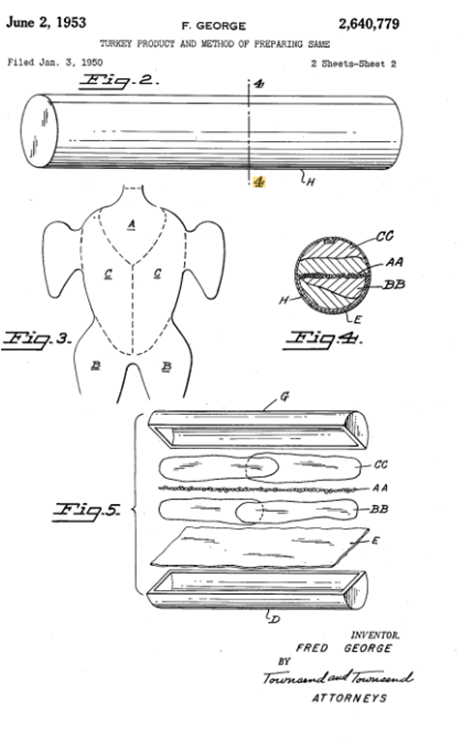
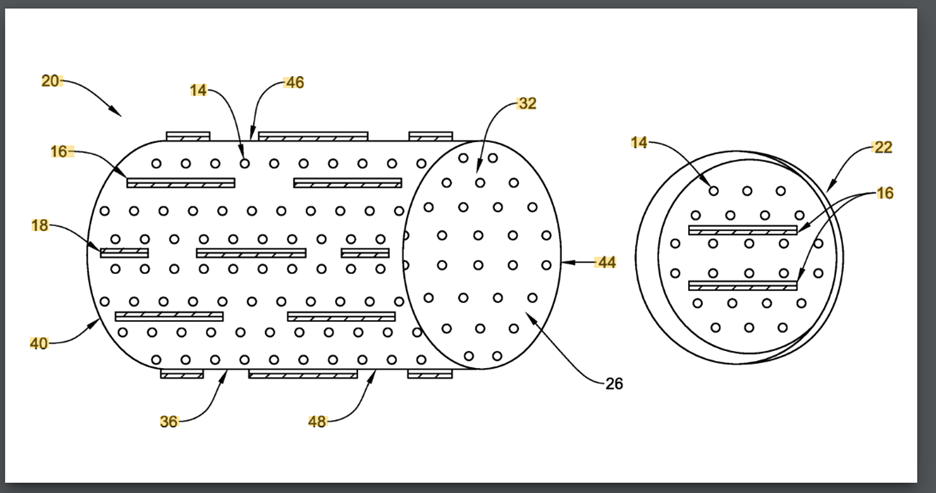
In the 1950s, someone looked at a turkey and thought, “You know what this needs? To be shaped like a meatloaf.” Enter U.S. Patent No. 2,640,779: the turkey loaf (or “log”). The goal was a uniform cylinder of turkey meat that could be sliced like bread. Thanksgiving flavor, meatloaf body. It was the original turkey impersonator before turkey bacon even existed.

Turkey product and method of preparing same
*picture for illustration purposes only. (Click on the image to view the original patent illustrations for technical reference.)

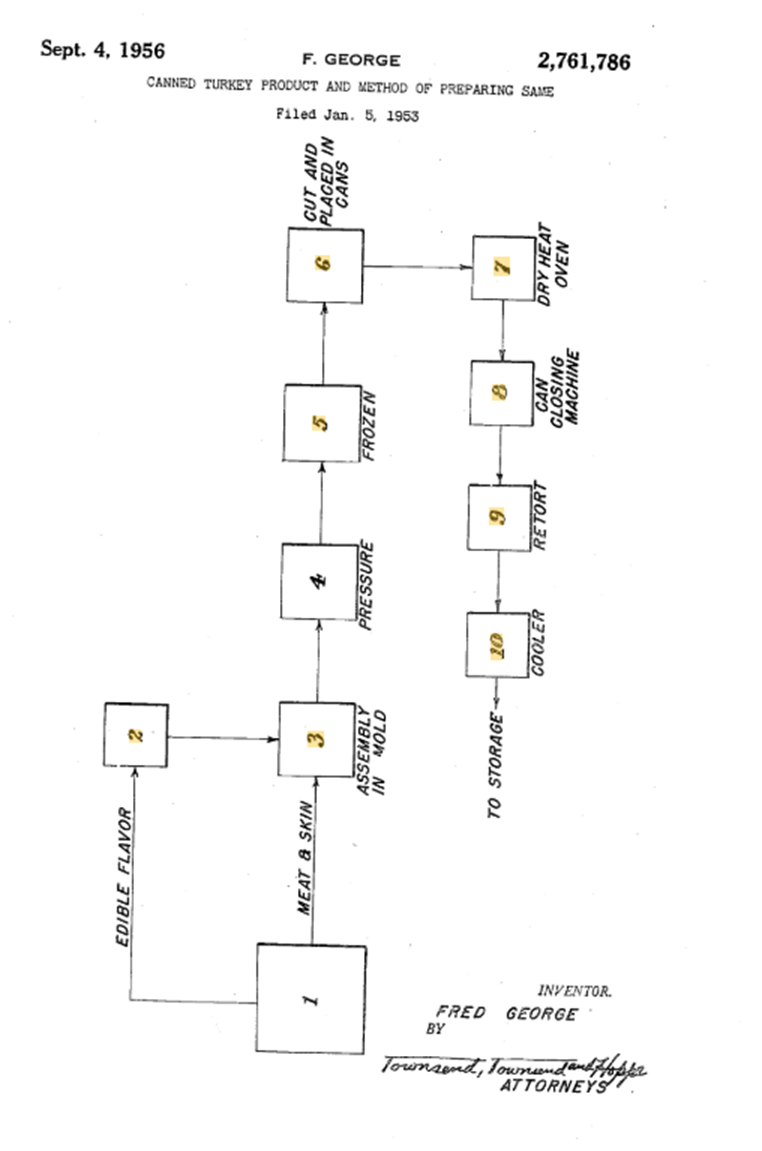
Not content with mere loaf-dom, inventors later canned the concept. US Patent 2,761,786 describes a process of pressing, baking, sealing, and sterilizing turkey into a can while somehow maintaining “the illusion of freshly roasted turkey.” That is an ambitious illusion. If your holiday dinner ever involves opening a can that looks like Spam, you now know who to thank.

Canned turkey product and method of preparing same
*picture for illustration purposes only. (Click on the image to view the original patent illustrations for technical reference.)

Flipping the bird: Patented turkey turners and racks

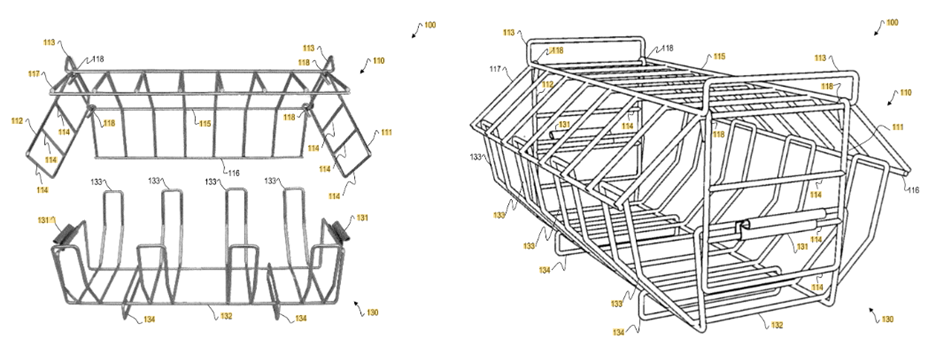
Anyone who has tried to turn a 20-pound turkey mid-roast knows the true meaning of flipping the bird. Enter the Turkey Flipper (U.S. Patent No. 9,155,422). It’s a two-piece rack designed so you can roast breast-side down and then rotate the entire bird without launching it across the kitchen or sacrificing a potholder. Related inventions include the 1967 Turkey Turner (a wire cradle that lets you rotate without tearing the meat) and various adjustable roasting baskets with detachable sides. Apparently, the collective trauma of wrestling a slippery, scalding poultry has been strong enough to generate multiple patents.

Turkey flipper and method for making and using
*picture for illustration purposes only. (Click on the image to view the original patent illustrations for technical reference.)

Holiday surgery: The intact turkey de-boning patent

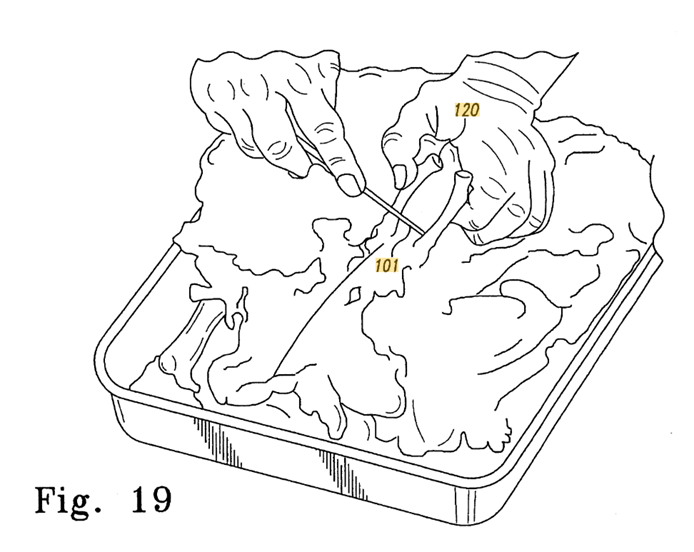
And for the truly committed: there is (US6572467B1) a patented process for de-boning a turkey while keeping the bird mostly intact. Because nothing says “relaxed holiday host” like performing surgery on dinner before you even preheat the oven.

Process for de boning a turkey
*picture for illustration purposes only. (Click on the image to view the original patent illustrations for technical reference.)

Ventriloquist dolls: Patented nightmares

Stuffing inside the bird is delicious and also a food-safety gamble. Solution? Devices that simulate cooking stuffing in a bird without actually putting it in the bird like US8741374B2.

Device and method to simulate cooking stuffing in a bird
*picture for illustration purposes only. (Click on the image to view the original patent illustrations for technical reference.)

Extreme Thanksgiving: Deep-frying turkey patents

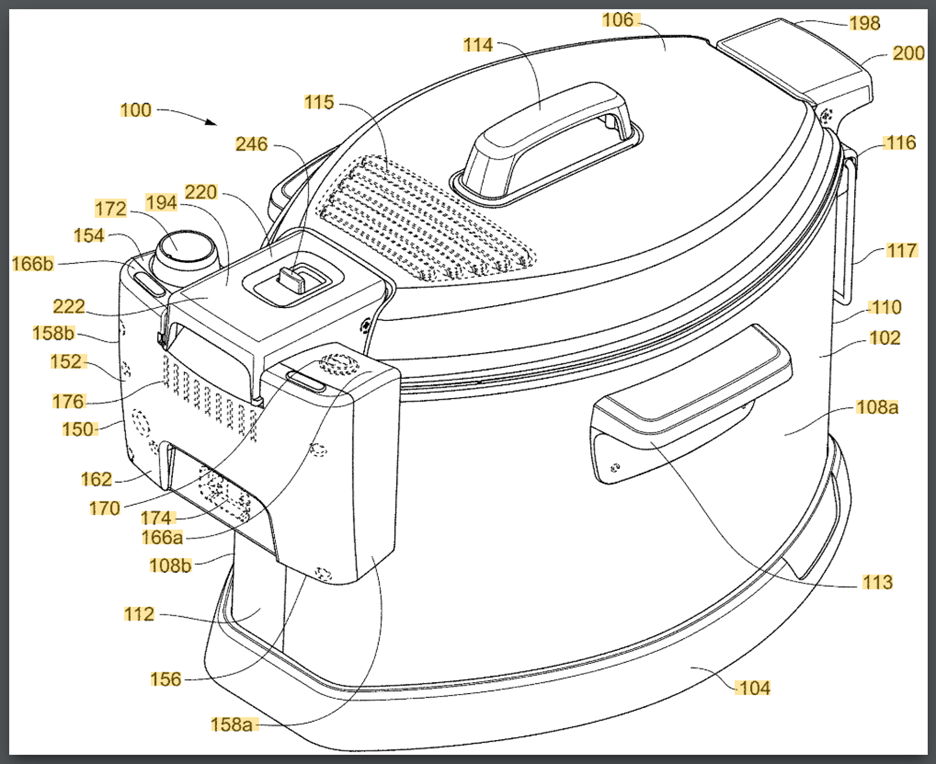
Deep-frying a turkey is peak American energy crispy skin, juicy meat, and a non-zero chance of setting the backyard on fire. Inventors have responded with oil-volume gauges so you don’t overflow the pot, winches so you can lower the bird from a safe distance, wind barriers, and even a rotisserie turkey deep fryer (US 10,849,460).

Rotisserie turkey deep fryer
*picture for illustration purposes only. (Click on the image to view the original patent illustrations for technical reference.)

Pie diplomacy: The patented split-pie divider

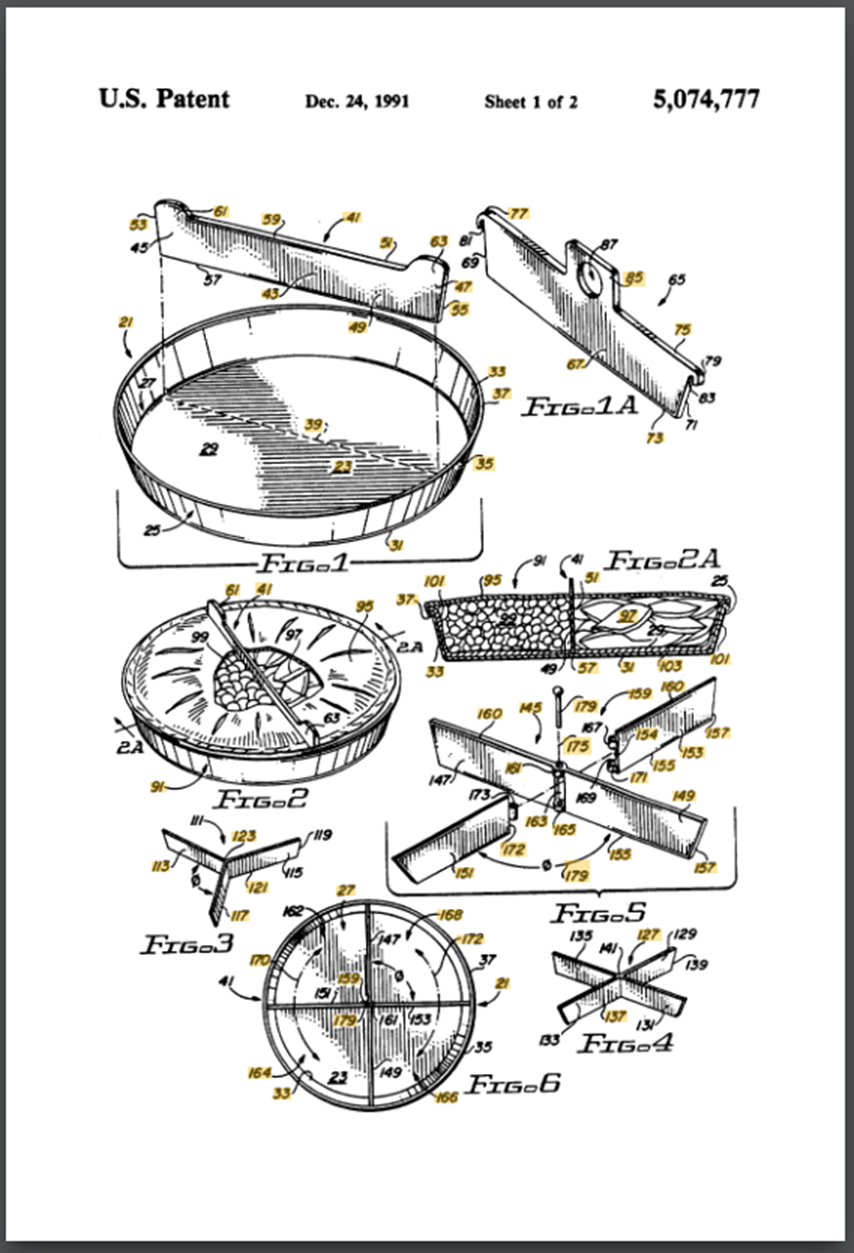
Indecisive about pumpkin versus pecan? U.S. Patent No. 5,074,777 covers an apparatus for making a split pie literally dividing one pie into two different fillings. No more family arguments. Just pure, patented compromise in a crust. Call it pie diplomacy.

Apparatus for making a split pie
*picture for illustration purposes only. (Click on the image to view the original patent illustrations for technical reference.)

Why we keep patenting Thanksgiving dinner

Somewhere between the turkey log, the flipper rack, and the split-pie divider, a clear theme emerges: Americans will invent almost anything to make Thanksgiving slightly less chaotic. We simply refuse to accept that a large bird is awkward, stuffing is messy, and pie choices cause family tension. Instead, we patent our way around the problems.

So, this year, between slicing, stuffing and devouring the bird, and negotiating pie slices, raise a glass and toast the inventors who looked at the chaos of Thanksgiving and said, “I can fix that.”


Conclusion

These weird Thanksgiving patents demonstrate how everyday challenges can inspire remarkable innovations. Behind each unconventional invention lies a practical lesson in creative problem-solving and the value of intellectual property. At MaxVal, we believe that protecting ideas and making informed IP decisions are fundamental to turning innovation into lasting value. After all, the next great invention could begin with something as simple as a Thanksgiving dinner.

Happy Thanksgiving!


Every invention starts with a spark of curiosity.

Turn innovative ideas into valuable intellectual property and unlock new opportunities for growth with MaxVal’s expertise and technology.

LinkedIn
X
Email

Have any content requests?

You can let us know at sales@maxval.com

Recent Blog Posts

Subscribe to Our Weekly Newsletter

Join over 30,000 of your Peers! Sign-up for latest IP insights.

Subscribe to Our Weekly Newsletter

Join over 30,000 of your Peers! Sign-up for exclusive content and get the latest IP insights delivered directly to your inbox.

Skip to content