In the ever-evolving landscape of intellectual property, one old threat continues to loom large over American innovation: patent trolls. More formally known as Non-Practicing Entities (NPEs), these organizations acquire patents not to develop or commercialize technology, but primarily to extract licensing fees or litigation settlements from companies that actually build things. While the concept is not new, the tactics have become increasingly aggressive and costly, especially for small and medium-sized businesses in the U.S.
What Exactly Are Patent Trolls?
Patent trolls don’t create products or innovate; they often hold vague patents and sue businesses for alleged infringement. Common targets include online retailers, software firms, and app developers using standard features. Since defense costs can reach millions, many companies settle early to avoid expensive litigation.
The Rise in Lawsuits: What is Driving It? Recent data indicates a sharp rise in patent litigation, particularly from the patent trolls targeting tech-centric U.S. businesses. Patent troll activity continues to climb. According to Unified Patents, NPEs are responsible for roughly 60% of all new U.S. patent suits, with the Western District of Texas emerging as a favorite venue.
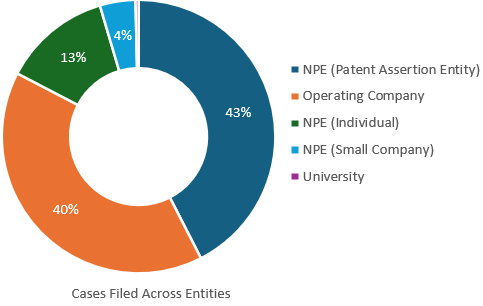
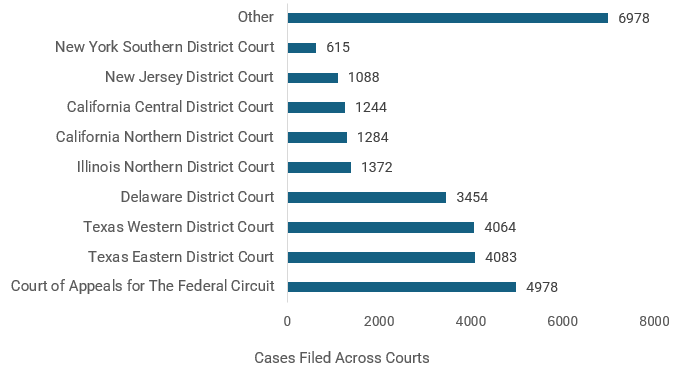
The chart depicts litigation cases filed over the last 5 Years (Source: Unified Patents)
Why Texas? Because the way the court works, there are often benefits for the plaintiffs. The procedural rules, basically the official steps and timelines the court follows, tend to move cases very quickly. This fast schedule makes it harder for defendants to get cases thrown out early. Then there are the judicial patterns, which are just the judge’s usual tendencies based on past cases. In the Western District of Texas, judges often hesitate to transfer cases to other states and have a history of decisions that lean more in favor of patent holders. Put together, this makes the district a popular choice for NPEs.
All of this adds up to a venue that many NPEs see as strategically advantageous. The combination of:
- Expedited trial schedules limit early dismissals.
- Reluctance to transfer cases keeps defendants locked into local courts.
- Historic tendencies show higher rates of favorable rulings for patent holders.
makes the district a preferred battleground for NPE-driven litigation.
Another big factor is litigation financing. Nowadays, hedge funds and private investors often pay for these lawsuits. They cover the legal costs in exchange for a share of whatever money comes from a settlement or judgment. This lets NPEs file more cases without worrying about the financial risk. With investors backing them, they can push for longer fights and stronger settlement pressure. As a result, patent lawsuits have increasingly become a business strategy focused more on financial returns than on actual innovation.
Several factors contribute to this spike:
- Litigation Financing: Hedge funds back patent suits, turning trolling into a business model.
- Strategic Court Selection: Trolls often file in plaintiff-friendly courts like the Western District of Texas, where procedural rules and judicial patterns favor patent holders. This district is known for its expedited trial schedules, limited likelihood of early case dismissal, and judges who are generally reluctant to transfer cases to other venues. Additionally, the court has historically shown a higher rate of upholding patent validity and granting injunctions or favorable jury verdicts to plaintiffs, making it an attractive forum for patent assertion entities seeking leverage in settlements.
- Patent Quality Issues: Many vague patents issued years ago remain enforceable, giving trolls easy grounds for infringement claims.
Who’s at Risk?
While tech giants like Apple and Amazon are frequent targets, trolls increasingly go after:
- Startups without dedicated legal teams.
- Retailers and logistics firms use standard software.
- Health-tech companies deploying diagnostic or AI tools.
- SaaS providers with cloud-based services.
Even non-tech companies are vulnerable if they use technologies like bar code scanners, Wi-Fi routers, or online payment gateways etc.
How to Protect Your Business Against Patent Troll Litigation?
Beating a patent troll isn’t only about winning in court — it’s about being prepared long before a complaint is filed.
Key Protection Strategies:
1. Challenge Weak Patents Early Through IPR
When sued, consider challenging the patent’s validity through an IPR at the USPTO. This route is faster and far cheaper than district-court litigation. A well-conducted prior-art search can expose weaknesses that undermine the patent’s enforceability.
2. Assess Patent Risks Before You Launch
Before launching a product, work with a patent service provider to analyze existing patents and assess the risk of infringement. This helps identify potential problematic patents early, allowing you to redesign or avoid risky features.
3. Strengthen Your Own Patent Position
Owning patents related to your technology can be a strong defense against patent trolls. When you have your own patents, you gain leverage because you can use them to fight back through countersuits or as part of settlement negotiations. This makes it riskier and less attractive for trolls to target your business, helping protect your innovations and reducing the chances of costly lawsuits.
4. Keep an Eye on New Patents and Ongoing Disputes
Stay informed about new patents in your industry and ongoing troll lawsuits. Early awareness allows you to prepare or challenge questionable patents before they become a threat.
Real-World Example: How a SaaS Startup Defended Itself?
Scenario: A SaaS startup offering project management software is facing a patent infringement lawsuit from a patent troll, which alleges that the software infringes on a broadly defined task scheduling patent.
Actions Taken: A Comprehensive Prior Art Search
To counter the patent troll’s claims, the startup partnered with MaxVal to conduct a comprehensive prior art search. The effort combined advanced tools, global databases, and expert analysis to uncover strong evidence that directly challenged the validity of the asserted patent.
- Multi-Database Coverage – Search extended across most of the commercial paid databases, along with USPTO, EPO, WIPO, and Google Patents, ensuring complete coverage of global prior art.
- Global Prior Art Identification – Included foreign-language patents and applications, with translations of key documents for relevance and accuracy.
- Non-Patent Literature (NPL) Search – Examined research papers, conference proceedings, product manuals, white papers, technical blogs, and online disclosures that often reveal innovations before patent filings.
- AI-Powered Search Tools – Utilized AI-powered patent search tools to speed up document review and to uncover hidden claim similarities that traditional manual searches might miss.
- Claim Mapping & Charting – Developed detailed claim charts mapping prior art references directly to the asserted patent claims, building a clear invalidation argument.
- Human Review to Confirm What Really Matters – Combined human expertise with automated tools for accuracy, filtering only the most relevant references to strengthen the IPR.
- Legal Team Collaboration – Worked closely with the startup’s legal counsel to align the prior art findings with litigation strategy.
- Actionable Deliverables – Delivered a comprehensive invalidation report with supporting evidence, charts, and analysis to support the attorneys representing the case.
Final Thought
A successful patent invalidation search requires a balanced approach—leveraging trusted databases, digging into non-patent sources, and harnessing AI for speed. By combining these tools, professionals can uncover stronger prior art, streamline the invalidation process, and gain a decisive advantage in disputes and litigation.
The goal is not just to win in court—it is to avoid the courtroom altogether.
At MaxVal, we’ve built a proven track record of helping businesses from startups to Fortune 500 companies defend themselves against patent trolls with precision-driven prior art searches, freedom-to-operate analyses, and robust invalidation strategies. Our blend of deep domain expertise, global database access, and AI-powered tools ensures that we consistently deliver actionable insights that stand up in litigation.
Whether you’re proactively safeguarding your innovations or responding to an unexpected lawsuit, MaxVal is your trusted partner in navigating the complexities of IP. If your company is facing similar challenges or wants to stay ahead of potential risks, our team is ready to support you with the same rigor and success we have brought to many others.