


The 2026 Tour de France is in its final stages this week. For over 100 years, it has been the biggest bike race in the world. As such it attracts the top cyclists in the world who are all seeking an edge to win this multi-stage race. While nutrition and training make up a large part of the cyclists’ preparation, technological innovation also plays a part. The advantageous use of innovation in the Tour de France was exemplified in the 1989 final time trial stage where Greg Lemond used aerobars and an aero helmet to beat Laurent Fignon by 8 seconds to win the multi-stage race.
Let’s take a look at some other innovations that have made it from the pro peloton to everyday riders.
Integrated Handlebar and Stem
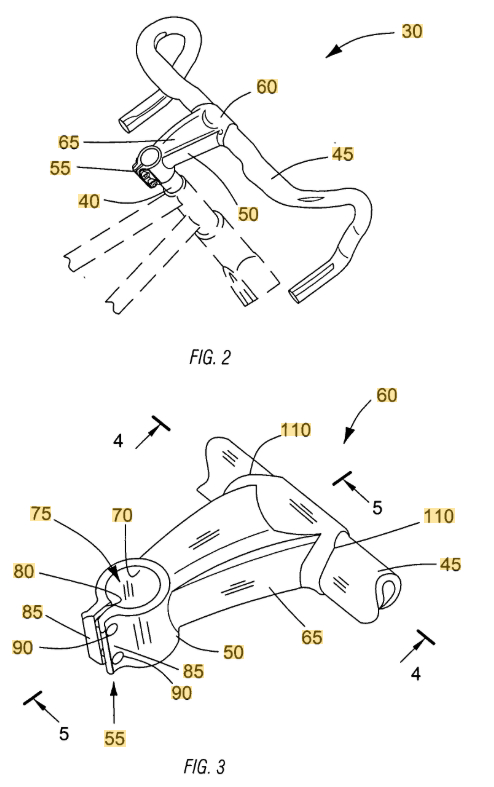
Road bikes used to be a jumble of criss-crossing cables around the handlebar. However, the quest for aesthetics and aerodynamics, component makers have learned to conceal the cables and join the handlebar and stem into one component (US2006219045A1). Now, you’ll hardly see a cable anywhere on a road bike.
Wireless Shifting
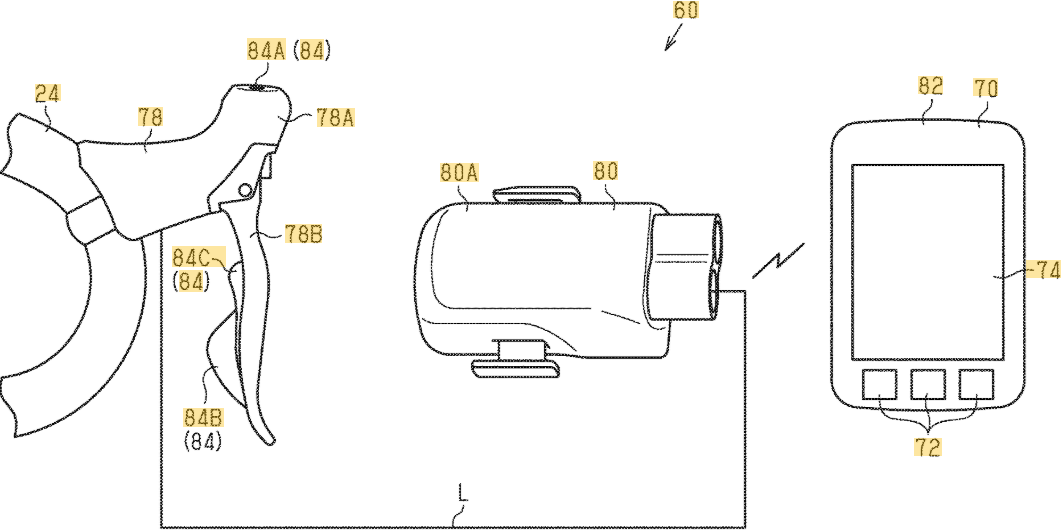
In another strategy to minimize cables on a bike, manufacturers have implemented wireless shifting, where the gear shift levers (now buttons) communicate electronically with the shifting mechanisms (US11299237B2).Wireless shifting is also now common on all modern group sets and has trickled down to modern (and expensive) bikes for the masses. The benefits include faster and more precise shifting and the option to add button shifters to multiple positions on the handlebar.
Carbon Frames
Although most bike frames are still made from steel or aluminum and to a lesser extent, titanium, carbon fiber has become the go-to material for performance road and mountain bikes. Most modern carbon frames use a monocoque assembly, rather than lugged construction, (CA2766818C).
Power Meters
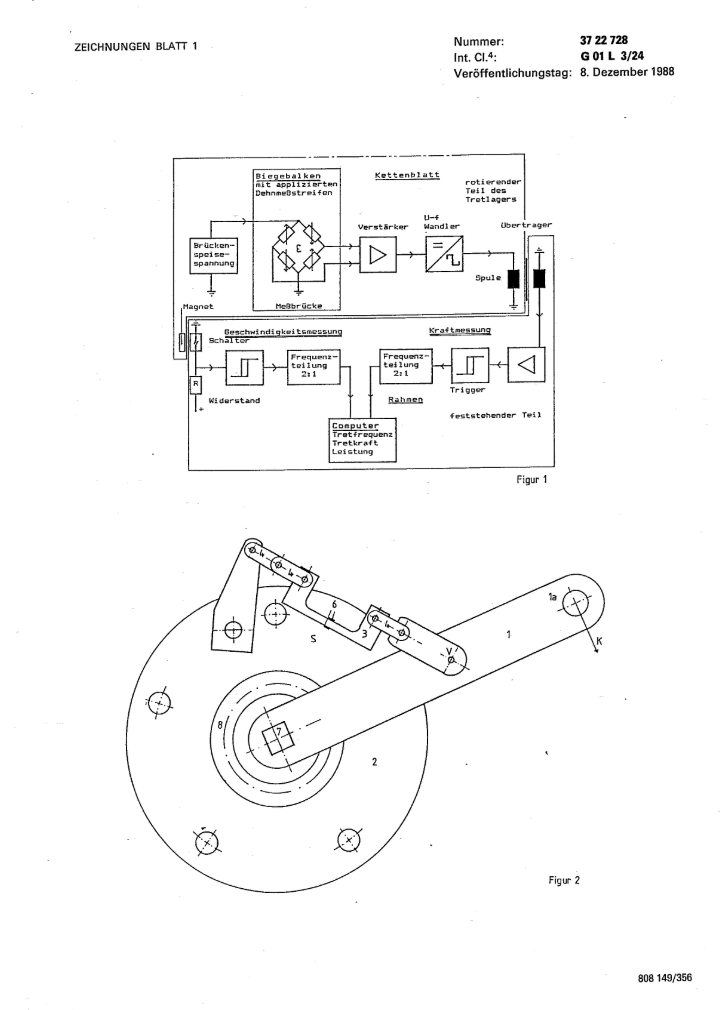
Ulrich Schoberer developed and patented the first power meter (DE3722728C1) for bicycles in 1986. Since then, power meters have become an essential tool for pro and amateur cyclists to measure their performance and training status. I used one myself back when I used to race.
The price of these devices has come down over the years, putting them within reach of amateur riders who wish to train with power. The form factors have increased since the original. They can be found on a bike’s cranks, wheel hubs or pedals.
Finally, we were intrigued by the drive assistance electric motor disclosed within US9944348B2, titled Bicycle control apparatus for bicycle assist device and bicycle assist device. This patent is assigned to Shimano Inc., describes a bicycle control apparatus includes a controller that is configured to control an assist motor for assisting a manual drive force of a transmission with a plurality of sprockets. There are rumors that this technology has also trickled down from the Tour de France.
Despite the basic simplicity of a bicycle, even the most ordinary technology can be improved by the work of creative people. Patents provide vital protection for your inventions. That is why the experts at MaxVal are always ready to help with your IP matters.
There are only a few stages left in this year’s Tour de France. Make sure you watch the pros in action. Better yet, get out there and ride.