When Spider-Man: Brand New Day swings into theaters on July 31, audiences will once again marvel at Peter Parker’s web-shooters and dismiss them as pure Hollywood fantasy, along with the other spectacular gadgets that dominate summer blockbusters. But the gap between the big screen and real-world engineering is much narrower than you’d think. While fans flock to the multiplex to see impossible technologies save the world, the true innovation story is quietly unfolding within the patent landscape, where many of these cinematic props are already legally recognized as working inventions.
To prove it, we have rounded up some iconic cinematic props that are backed by real, enforceable patents. The timeline below maps exactly when these technologies made the leap from Hollywood dreams to official USPTO filings and grants, proving the race to build the future started much earlier than you might think!
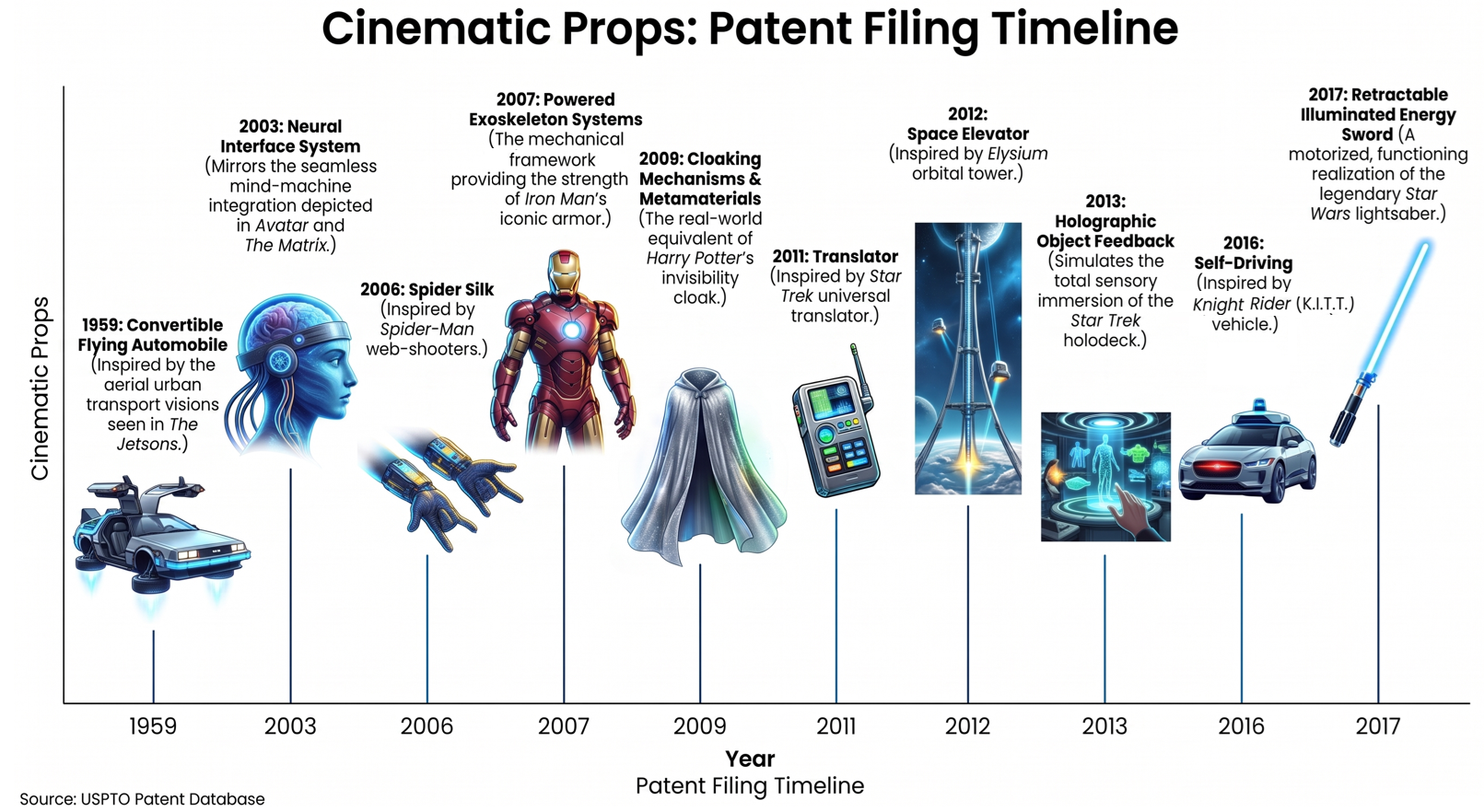
Now, let’s break down the real-world engineering behind some of these inventions and see which ones are actively being used in the real world today.
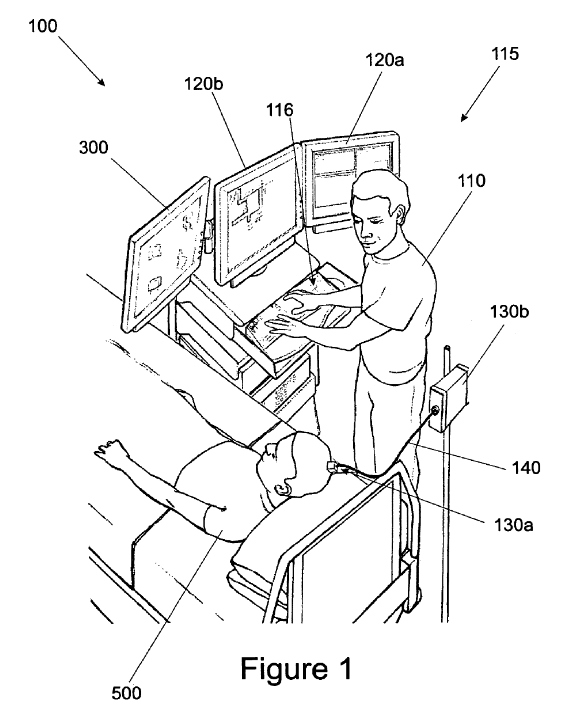
Neural Interface System and Brain-Computer Integration (US7751877B2)
This patent describes an implanted electrode array that reads electrical signals fired in the motor cortex during intended movement, translating those signals into commands for external devices while simultaneously providing sensory feedback. This reflects the mind-machine integration seen in Avatar’s human-to-Na’vi neural link and the full sensory simulations of The Matrix, where human consciousness seamlessly controls external bodies or virtual environments.
Today, BrainGate’s FDA-approved neural interfaces are actively allowing paralyzed patients to navigate computer screens and control robotic arms using only their thoughts, with the system going completely wireless in 2021. Furthermore, companies like Neuralink, which began human trials in 2024, are actively developing implants with even higher electrode counts to increase signal resolution, proving this cinematic technology is firmly in the clinical phase.
Synthetic Spider Silk Proteins (US8729235B2)
This patent covers recombinant spider silk proteins produced by genetically engineered microorganisms, allowing them to synthesize fibers with the tensile strength of steel. This mirrors the engineered chemistry behind Peter Parker’s web-shooters in Spider-Man, which rely on organic, rapid-setting webbing that makes swinging across skyscrapers physically plausible within the logic of the films.
Today, Swedish biotech company Spiber Technologies has successfully commercialized this exact material under the brand name Qmonos™. These incredibly strong synthetic fibers are already being used in high-performance apparel, such as luxury North Face parkas, and medical researchers are actively testing the material for advanced wound dressings that accelerate healing.

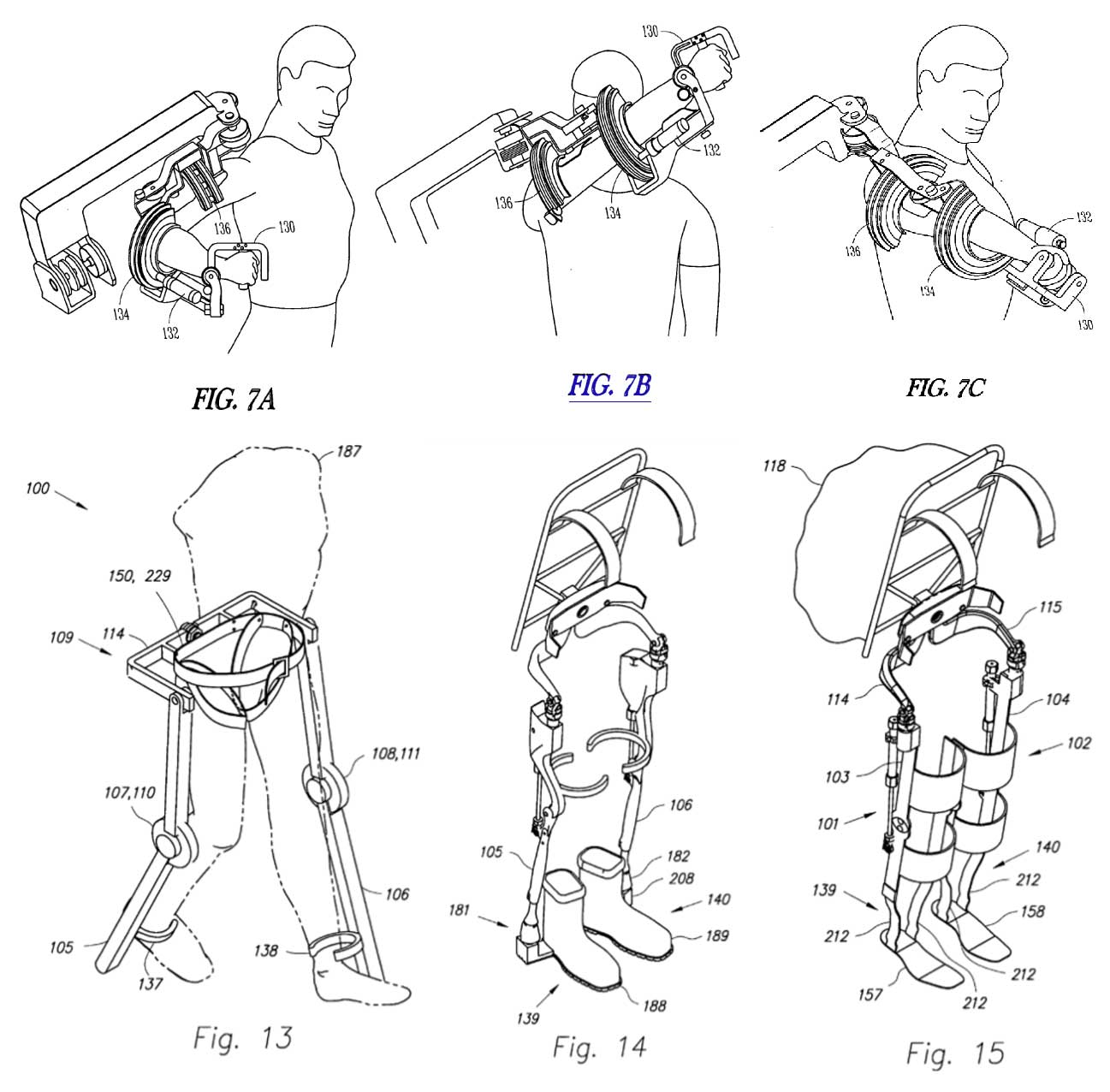
Powered Exoskeleton Systems (US20080009771A1, US7947004B2)
Describing wearable robotic frames, these two filings combine to form a complete mechanical suit. One application details hydraulic and pneumatic systems that amplify intended movement through muscle signals, while the second patent covers a lower extremity exoskeleton that transfers heavy loads directly to the ground. Together, they perfectly mirror Tony Stark’s Iron Man armor and the military AMP suits in Avatar, serving as the ultimate cinematic tools for multiplying human strength and endurance in hostile environments.
In the real world, FDA-approved exoskeletons like the Ekso GT are currently deployed in hospitals, helping paralyzed patients and stroke survivors regain their mobility by translating their muscle intentions into powered steps. Meanwhile, industrial versions are actively used on factory floors and construction sites to distribute heavy loads, preventing worker fatigue and repetitive strain injuries.
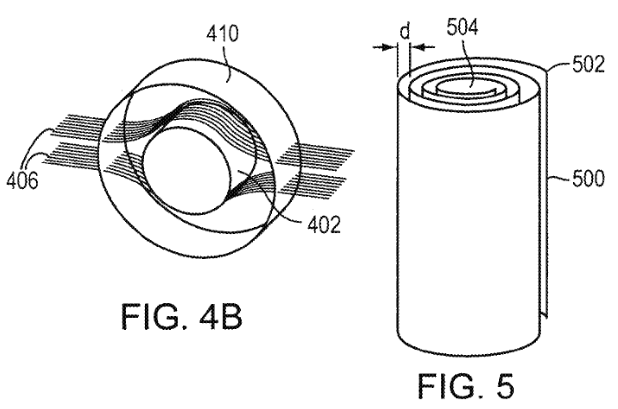
Cloaking Mechanisms and Metamaterials (US9677856B2)
Detailing metamaterial transformation optics, this patent engineers materials with precise permittivity that redirect electromagnetic waves around an object so they continue on their original path, rendering the object virtually undetectable. This represents the real-world engineering equivalent of Harry Potter’s flawless invisibility cloak, the radar-evading capabilities of Star Trek starships, or the Avengers’ disappearing SHIELD helicarriers.
While full visual invisibility is still in active development at institutions like Duke University, military contractors are successfully using these metamaterials for tactical applications today. Commercially available products, like HyperStealth Biotechnology’s Quantum Stealth camouflage, successfully use optical properties to mask heat signatures and evade radar at near-infrared and microwave wavelengths.
Universal Language Translator (US9864745B2)
This device automatically translates spoken words in real time while tracking a specific speaker and filtering ambient noise, uniquely synthesizing the output so it sounds exactly like the original speaker’s voice. It brings to life the seamless, infrastructure-level translation seen with Star Trek’s universal translator and the Babel fish from The Hitchhiker’s Guide to the Galaxy, dissolving the wall of language instantly.
Google is already turning this into a consumer product, launching real-time audio translation powered by Gemini 2.5 Flash Native Audio for over 70 languages. Going beyond simple word replacement, their latest direct speech-to-speech research actively maps audio from one language to another to preserve tone and cadence, synthesizing the translation in the original speaker’s own voice without any intermediate text steps.

Autonomous Self-Driving Vehicle Systems (US9646356B1)
Describing integrated sensor arrays and onboard computers that process real-time environmental data, this patent enables vehicles to control speed, braking, and steering without any human input. It turns the autonomous driving seen in Knight Rider’s high-tech companion K.I.T.T. and the weaving pods of Minority Report into standard, everyday transportation infrastructure.
The technology is actively operating on public roads right now, with Waymo, Cruise, and Tesla running commercial autonomous ride-sharing fleets in multiple U.S. cities. While handling complex edge cases like severe weather and construction zones remains a hurdle for full Level 5 autonomy, self-driving vehicles are expected to become a completely normal part of urban transit within the next five to ten years.

While the inventions above are fully integrated into our modern world, other cinematic patents are actively shaping the near future. The concept of flying cars (US3090581A) is being realized by aviation engineers through commercial electric vertical takeoff and landing (VTOL) services, which were launched by companies like Joby Aviation in 2024. Similarly, the absolute sensory immersion of the Star Trek holodeck is taking shape via advanced holographic and haptic feedback displays (US9367136B2), a system that engineers are recreating by combining Microsoft’s HoloLens, UltraLeap’s mid-air ultrasonic haptics, and Disney’s omnidirectional HoloTile floor.
Even the most fantastical sci-fi concepts are seeing tangible progress. The physics of Star Wars are being tested with real-world patents for retractable energy swords (US10065127B1), which Disney utilized to build a fully functioning haptic prop for their Galactic Starcruiser experience, while independent engineers have prototyped blades using magnetic fields and 12,000°F plasma. Meanwhile, the freestanding space elevators (US9085897B2) is the subject of active official research programs in Japan and China; though currently limited by the complexities of scaling carbon nanotube manufacturing, the core engineering to lift elevator cars straight into orbit is already validated.
The line between cinematic props and the patent landscape has quietly collapsed. Whether it’s spider silk, exoskeletons, or autonomous vehicles, these technologies did not emerge from pure imagination, but came from engineers and researchers solving hard technical problems.
What the patent filings tell us is simple: the cinematic props that look impossible on film usually aren’t. They are just waiting on the right material, the right manufacturing process, or the right regulatory framework. That’s not movie magic. That’s engineering.
Frequently Asked Questions About Cinematic Patents
Are these cinematic patents actually real and enforceable?
Yes. Every technology listed above is backed by a real, legally recognized document filed with the USPTO. While some concepts, like the space elevator, are still waiting on materials science to catch up, others like synthetic spider silk and powered exoskeletons are fully commercialized. If you are curious whether a futuristic invention already exists in the real world, our Patent Search and Analytics services can help you uncover the current patent landscape.
Has the government patented other sci-fi or unusual technologies?
Absolutely. The line between science fiction and government innovation gets even blurrier when you look at advanced aerospace engineering. For instance, the U.S. Navy has filed highly ambitious patents for gravity manipulation, inertial mass reduction, and room-temperature superconductors.
How can I find out if my futuristic idea is already patented?
Before investing time and resources into an ambitious new concept, it is crucial to understand the existing intellectual property. MaxVal offers comprehensive Prior Art Search and Patentability Search services to help you determine if your idea is truly novel or if someone else has already beaten you to the patent office.