


Innovations in Leisure · Summer Edition
So, You Want to Patent Summer Fun?
A tour of real (and baffling) inventions that somebody, somewhere, filed paperwork for, because nothing says “relaxation” like a 47-page legal document.
Summer is a sacred season — a time for sunscreen, popsicles, and doing absolutely nothing productive. Somebody, however, has always been in the corner of every beach, squinting at your good time and thinking, “I could patent that.”
Welcome to the United States Patent and Trademark Office’s most underappreciated archive: the Summer Fun drawer. Nestled therein exists a glorious catalog of inventions designed to enhance your leisure hours — filed by people who clearly spent their leisure hours doing anything but relaxing, because nothing says “relaxation” like a 47-page legal document.
The USPTO has granted over 11 million patents since 1790. A genuinely surprising number of them are about having a good time at the beach. A slightly more surprising number of them are completely unhinged. Let us tour the highlights.
1. The Ice Cream Cone Rotating Devices
U.S. Patent Nos. 5,971,829 and 10,278,409B1
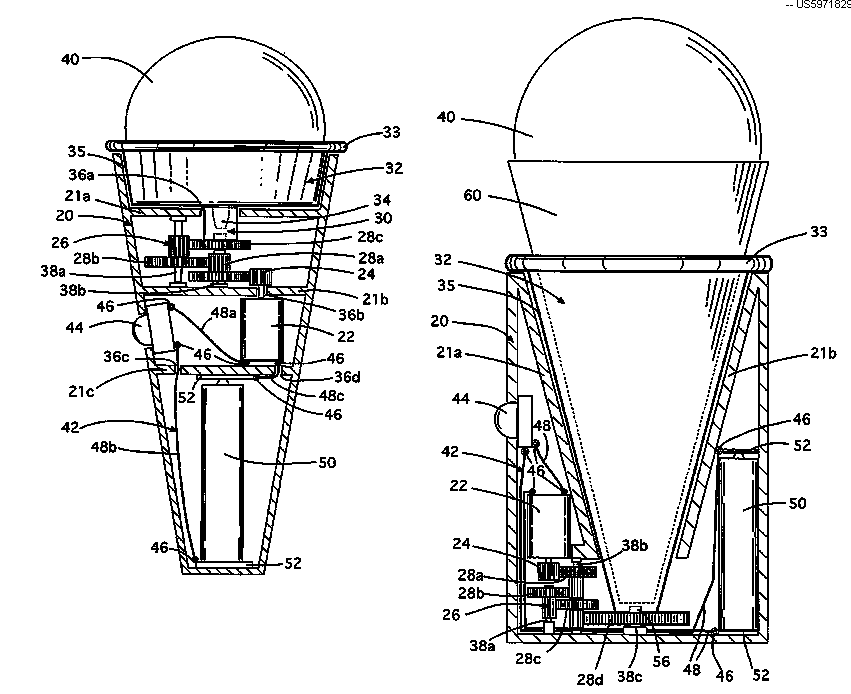
Yes, these are real. Someone looked at an ice cream cone mankind’s most intuitive handheld dessert, engineered over a century of collective wisdom and thought, “What if it spun?” The ‘829 patent describes a battery-powered cone holder that rotates the ice cream so your tongue can lick it evenly without the labor of, and we quote, “A novelty amusement eating receptacle for supporting, rotating and sculpting a portion of ice cream “.
To be clear, the problem being solved here is the physical effort of turning your wrist. The inventor apparently watched someone eat ice cream, observed the slight flick of the wrist required, and decided that this was the friction standing between humanity and peak dessert enjoyment. A noble calling. A bold life choice.
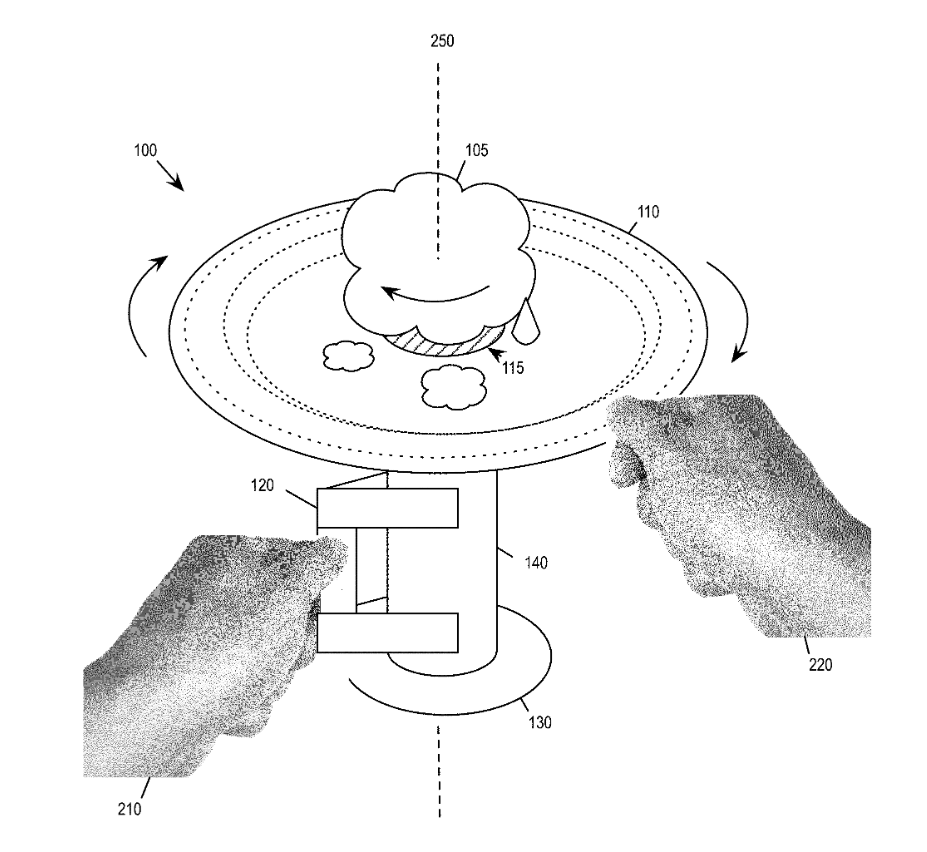
The ‘409 patent describes a device the requires a more manual effort. The user has to turn the cone by using his own hands. Perhaps a nod to those who are more physically fit. This device also improves on the earlier cone rotator, by including a dish that catches dripping ice cream. Mmmmm…melty goodness.
2. The Inflatable Dartboard
U.S. Patent No. D1060505S
Darts, as a sport, was invented so that British pub-goers would have something to do with their hands between sips. It is played on dry land, in dim lighting, by people who are not currently floating on a pool noodle. Someone looked at this and thought: what if we brought the darts to the water?
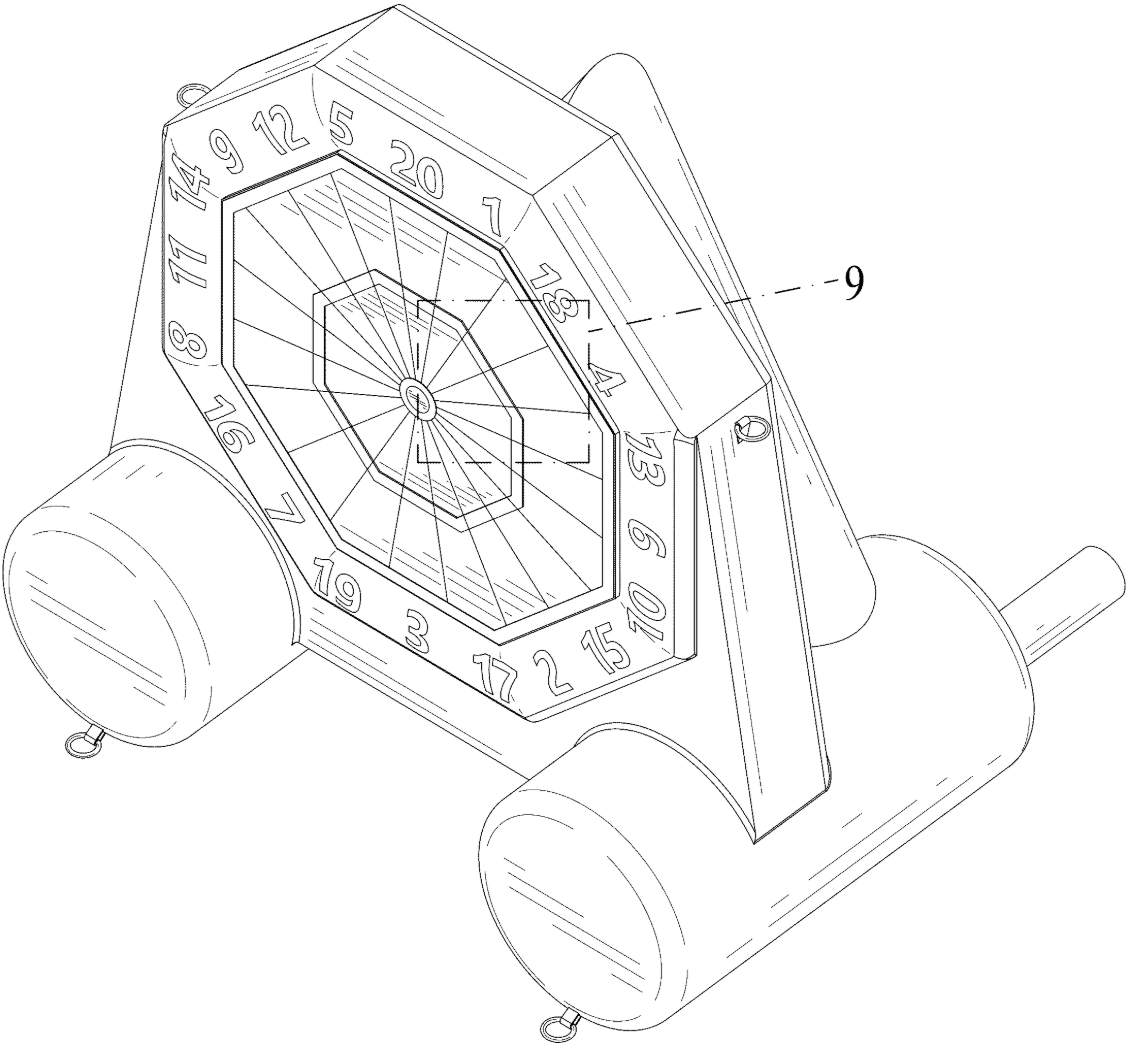
The patent, earnestly filed and earnestly granted, describes a floating inflatable dartboard designed for use in swimming pools. While I am quite certain this device uses “darts” with Velcro or some other safety tip, I am also certain that someone somewhere will ruin the game by using real darts. Sad commentary.
3. UV Ray Blocking Headwear
U.S. Patent No. 10182605B1
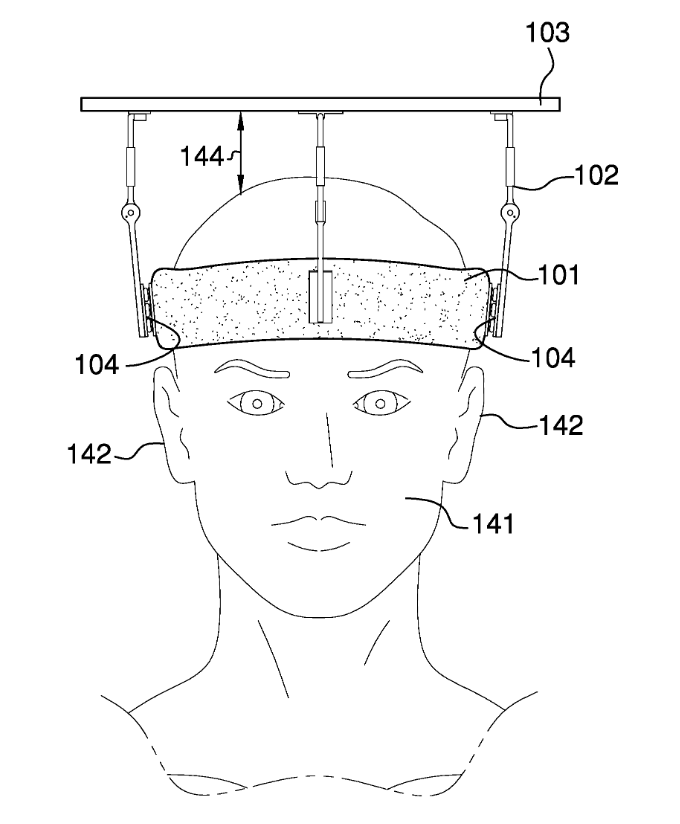
We all know the importance of UV ray protection. This device is for those who are seeking protection from the sun’s rays, but feel they look silly in a hat.
Now here is a man with a problem. His back. Specifically, the part of his back that is between his shoulder blades an area that has haunted solo beachgoers since the invention of SPF. He cannot reach it. His friends are not nearby. The sun is merciless. And so he filed a patent.
4. Sandcastle Construction Systems
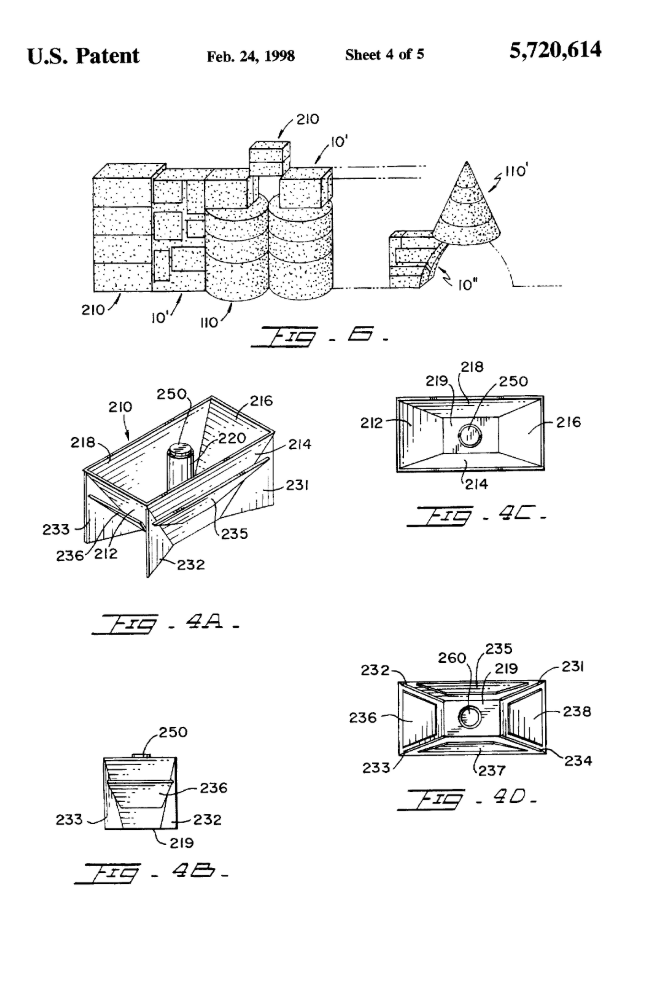
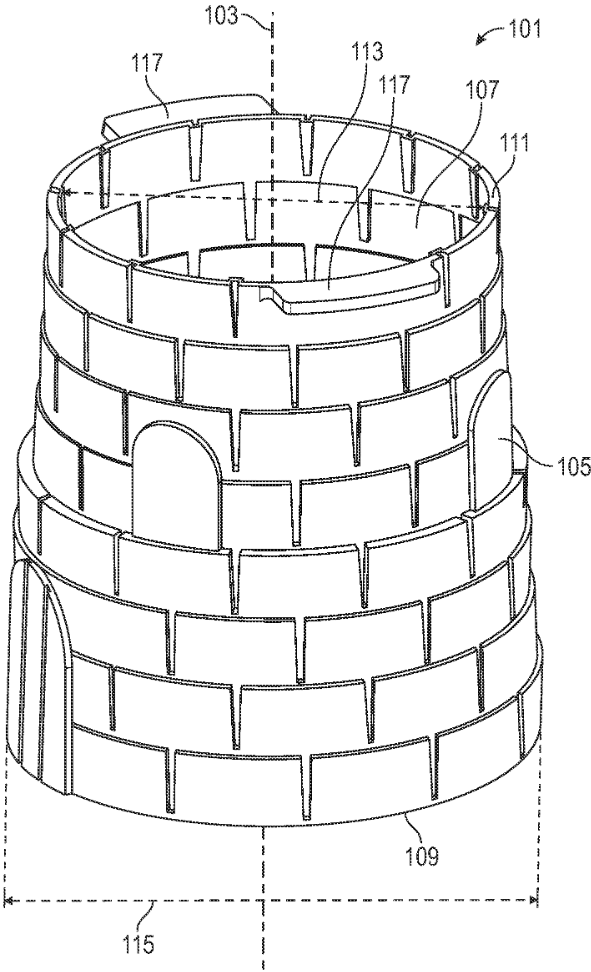
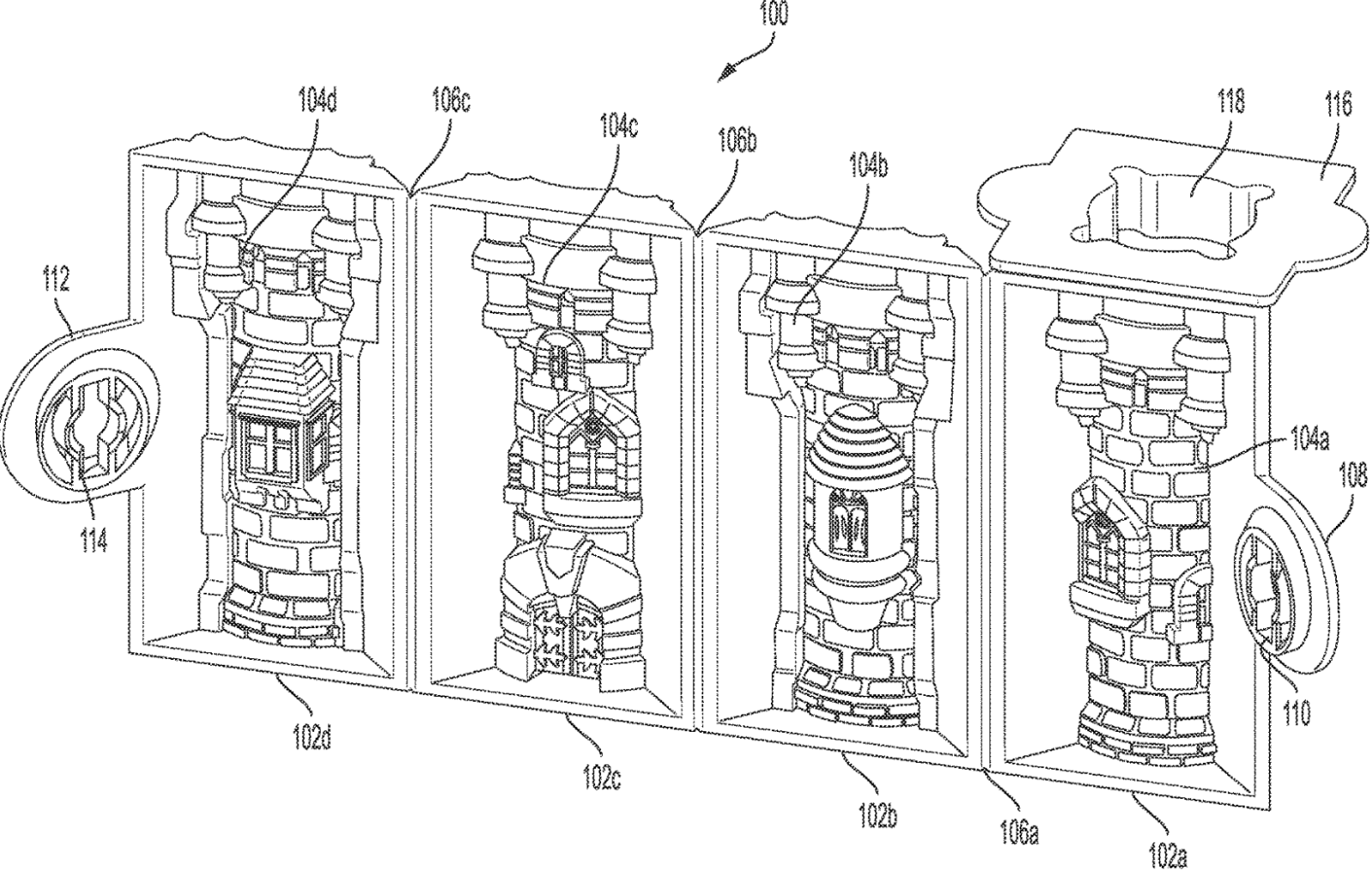
U.S. Patent Nos. 5720614A and 12458903B2 and U.S. App. US2024316474A1
Sandcastle building is an art. It is a meditative practice, a test of patience, a communion between child and shoreline that has produced masterpieces and collapses in equal measure for as long as children have had access to wet sand. It requires imagination, imprecision, and a willingness to lose everything to a single rogue wave.
The patents in question are multi-part injection-molded form systems that allow users to construct architecturally consistent sandcastles with “repeatable structural integrity.” The kit includes turret molds, wall segments, moat guides, etc.
Nobody wants a lopsided turret. But the joy of a sandcastle is precisely its structural ambiguity the turret that’s more of a lump, the drawbridge that is clearly just a stick. The moment you introduce “repeatable structural integrity” to a sandcastle, you have built something that is architecturally impressive and emotionally hollow. The wave that takes it out will feel nothing.
5. The Portable Hammock (Single Occupant, No Trees Required)
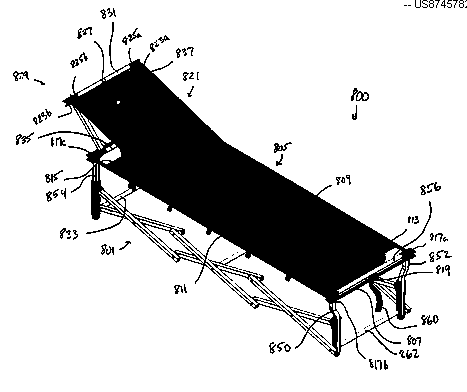
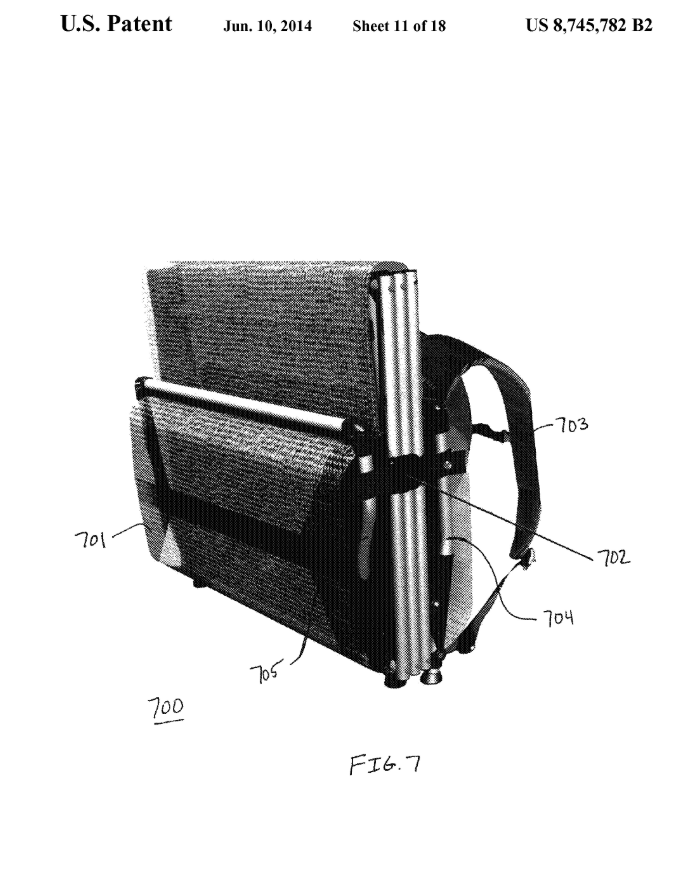
U.S. Patent No. 8745782B2
This is the most ambitious entry and, in its ambition, the most poignant. The inventor let us call him a dreamer, because he looked at the classic hammock and identified its core flaw: it requires two trees. Trees, as any urban beachgoer knows, are not always available. The beach is, in fact, famous for their absence in precisely the spots where you want to nap.
The portable hammock is a full-body sling system attached to a structural frame worn like a backpack. When deployed, you enter it, and the frame supports your weight at multiple angles that are theoretically restful.
Hmmmm…Seems more like a self-supporting chaise longue to me.
In Defense of the Summer Patent
It would be easy to laugh at these inventors and we have. But there is something quietly wonderful about a person who looks at summer, at this season of heat and leisure and the profound human desire to do nothing at all, and thinks: I can make this better. I will file the paperwork.
The USPTO estimates it takes roughly two years and several thousand dollars to obtain a patent. Someone spent two years thinking about the motorized ice cream cone. Someone spent that time, and that money, improving the lick. And while none of these devices may have found their way to the beach bags of the masses, they exist filed, numbered, searchable as evidence that the human instinct to tinker does not take summers off.
So the next time you’re at the beach, struggling to apply sunscreen, glancing at the sandcastle you’ve built with your bare, unassisted hands, wishing someone had just solved this already know that someone tried.
Now go enjoy your summer. The inventors would want you to.
Frequently Asked Questions About Weird Summer Patents
1. What are some examples of weird summer patents?
Some of the most unusual summer inventions filed with the USPTO include automated rotating ice cream cones, floating inflatable dartboards for swimming pools, wearable tree-free portable hammocks, and standardized sandcastle construction frameworks.
2. Is there a patent for a motorized ice cream cone?
Yes. U.S. Patent No. 5,971,829 protects a battery-operated novelty amusement eating receptacle designed to rotate a portion of ice cream to eliminate the manual effort of turning the wrist.
3. How long does it take to get a novelty or summer invention patented?
According to historical estimates from the USPTO, it generally takes roughly two years and several thousand dollars in legal and application fees to fully process and secure a patent application.