As the azaleas burst into bloom and the world’s elite golfers descend on Augusta National for the Masters Tournament this week, one thing is unmistakable: the precision, power, and forgiveness on display aren’t just the result of countless hours on the range. They’re powered by decades of cutting-edge engineering, meticulously protected by patents. While fans debate birdies and eagles under the Georgia pines, behind the scenes lies a quieter battle, one fought not on the course but in the U.S. Patent and Trademark Office. Golf club patents have transformed the game from wooden sticks to high-tech marvels, and their story is as compelling as any major championship drama.
The Roots of Innovation: Early Golf Club Patents
Long before titanium drivers and adjustable weights, golf clubs were handcrafted from wood, simple, elegant, and inconsistent. That began to change in the late 19th century. In 1891, Francis “Frank” Archibald Fairlie secured what many consider the first patent for a golf club (GB189106682A) for an “Improvement in Metal Headed Golf Clubs.”
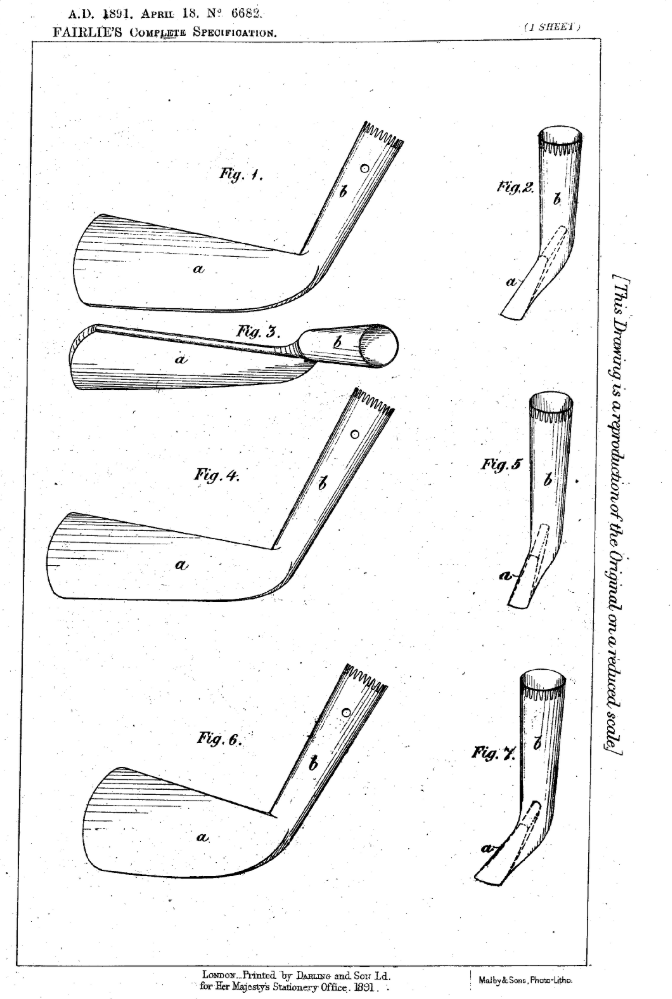
This was revolutionary at a time when clubs were primarily hand-crafted from persimmon or hickory. By 1896, American inventors like Warren Briggs were patenting fork-spliced drivers (GB189605425A), while others experimented with center-shafted designs. Even earlier whispers of patents appear as far back as 1876 with Thomas Johnston’s Scottish club design.
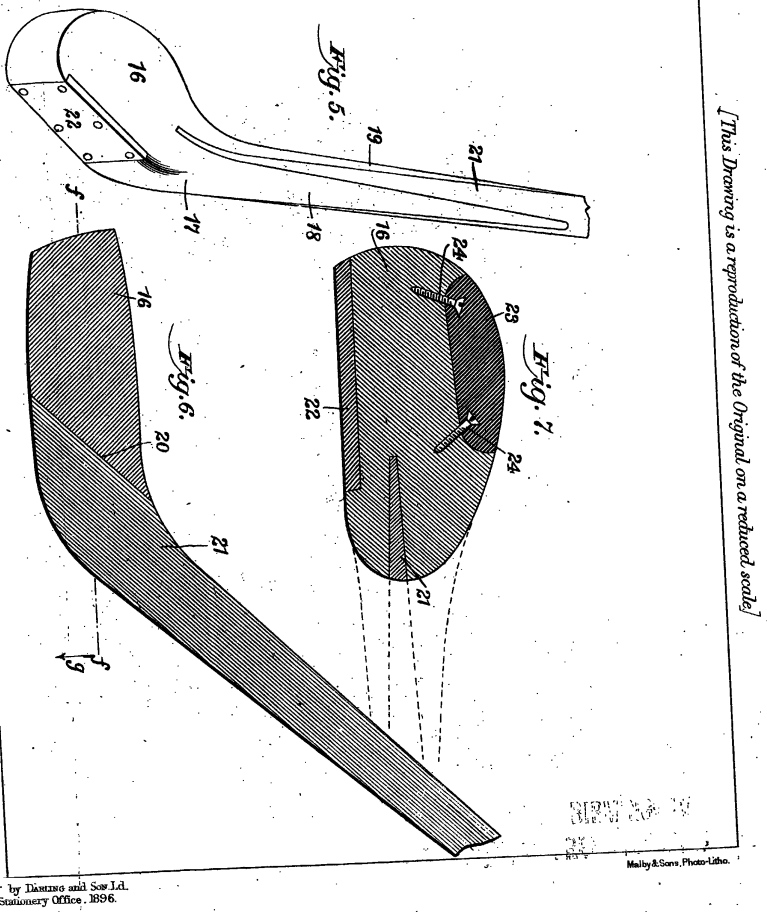
These early filings laid the groundwork for what was to come. Steel shafts, patented in the early 1900s and legalized by the USGA in 1924, brought consistency that hickory could never match. The shift from wooden heads to metal wasn’t just aesthetic; it was a patent-protected leap that changed ball flight and durability forever. By the mid-20th century, the stage was set for an explosion of creativity.
Game-Changing Patents That Redefined Golf
Fast-forward to the modern era, and a handful of patents stand out as true turning points. Karsten Solheim, the engineer behind Ping, forever altered irons and putters. In the late 1960s and early 1970s, he patented perimeter-weighted “cavity back” irons and heel-toe weighted putters (e.g., CA1204462A and US3655188A). These designs moved mass to the edges of the clubhead, enlarging the sweet spot and forgiving off-center hits, a boon for weekend warriors and pros alike. Ping’s innovations didn’t just sell clubs; they gave access to better golf to the masses.
For everyday golfers, this wasn’t just an improvement; it was access to better performance.
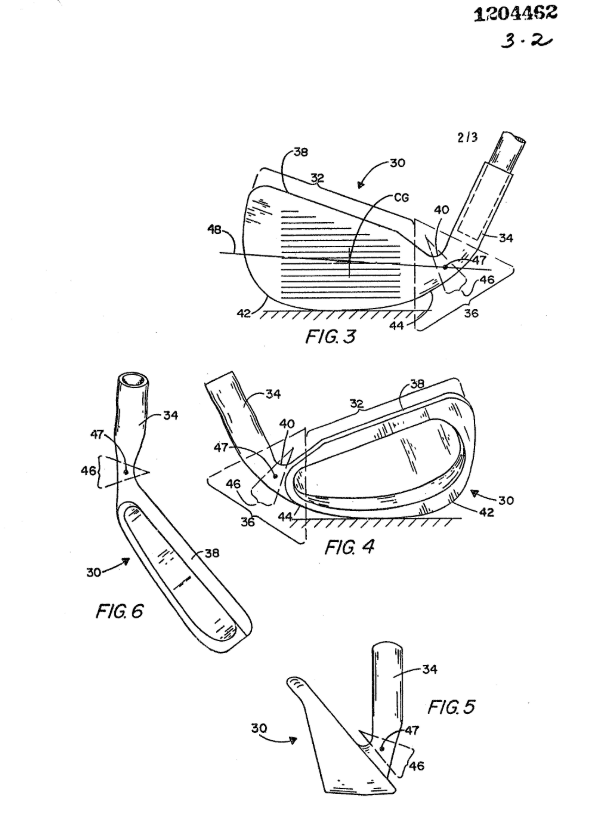
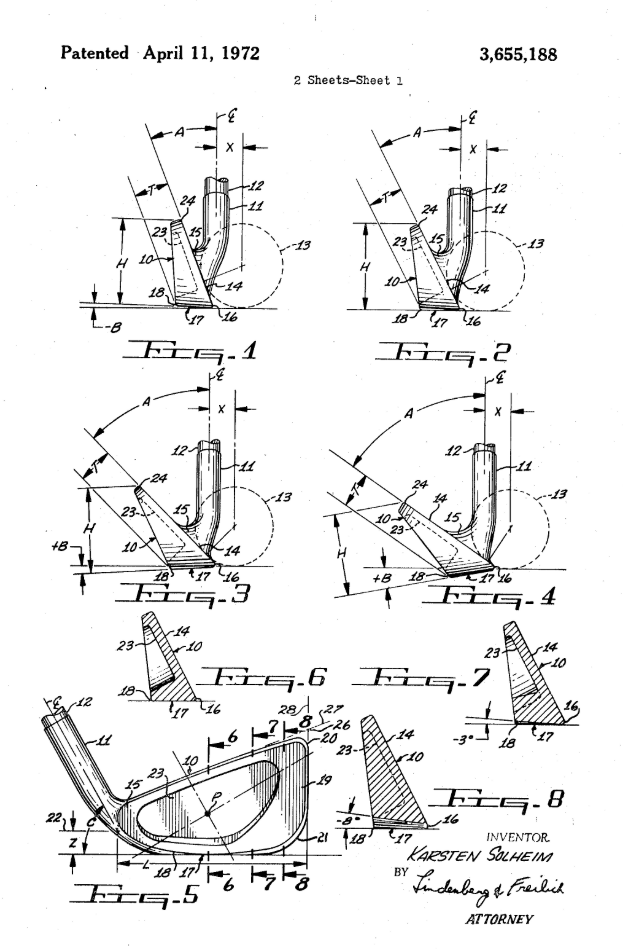
*picture for illustration purposes only. (Click on the image to view the original patent illustrations for technical reference.)
The Metalwood Revolution
Then came the metalwood revolution. TaylorMade’s 1979 “Pittsburgh Persimmon” was the first stainless-steel driver, which kicked it off, but it was Callaway’s 1991 Big Bertha that supercharged the trend. With its oversized titanium head, the Big Bertha promised (and delivered) massive distance and forgiveness (US 8,696,491, D786,993, and D726,856).
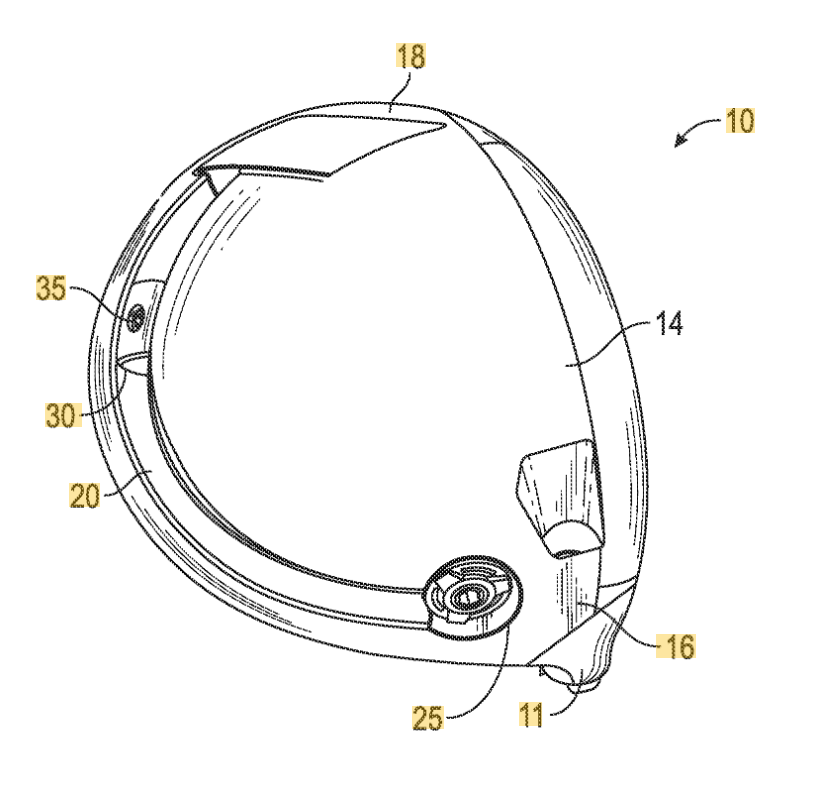
Callaway didn’t stop there. Their later “Jailbreak” technology in Epic drivers reportedly drew on dozens of patents, including specialized titanium bars behind the face for stability and speed. A single driver model can now embody 40 to 100 patents covering everything from crown shaping to internal ribs for sound tuning.
TaylorMade countered with movable weight systems, sliding tracks that let golfers tweak draw or fade bias. Ping’s G-series drivers have been shielded by more than 20 patents each, while Titleist has pursued everything from co-forged irons to removable weight slugs.
Even today, filings from 2025–2026 show ongoing work on aerodynamic clubheads, sound-modifying soles, and multi-material constructions. Over 500 golf-related patents were issued by the USPTO in 2020 alone, spanning tees to full club assemblies.
These aren’t just gadgets. They represent massive R&D investment, hundreds of millions across the industry, protected so companies can recoup costs and keep innovating.
The Double-Edged Sword: Patents, Lawsuits, and the Rules of Golf
The golf equipment industry is fiercely competitive and tightly protected. Valued at about $84 billion worldwide, innovation here depends on intellectual property, and when that much money is on the line, disputes almost always follow.
Patent “thickets” (layering multiple overlapping protections) are common. TaylorMade has squared off against PXG over iron manufacturing techniques, Callaway and Titleist have battled over ball-related tech (with injunctions and settlements worth millions), and even budget brands like Costco’s Kirkland Signature have faced suits from TaylorMade for allegedly copying P790-style irons.
To keep the game fair, governing bodies like the USGA regulate equipment standards.
They enforce limits on:
- Clubhead size
- face “spring-like” effect (coefficient of restitution),
- Groove design
This ensures that technology enhances skill but doesn’t replace it.
Without patents incentivizing breakthroughs, we’d lack the forgiveness that lets average players enjoy the game. But critics worry that over-patenting can stifle competition or drive up prices.
Still, the net effect is progress: adjustable hosels, AI-optimized faces, tungsten weighting, and even emerging data-driven smart clubs. Amateurs hit it farther and straighter (not me); pros find new ways to attack courses.
Why This Matters (Even If You’re Not a Pro)
Golf club patents aren’t dusty legal documents; they’re the reason the game feels fresh every season. They reward inventors, fuel competition, and trickle down to every golfer who steps to the first tee. Whether you’re a scratch player dialing in launch conditions or a high-handicapper needing that extra bit of forgiveness, patented tech is in your bag.
Because of patented innovations:
- Amateurs hit the ball farther and straighter
- Clubs are more forgiving
- Players can customize performance
- Equipment continues to evolve every season
Whether you’re a weekend golfer or a professional, you’re benefiting from decades of protected innovation.
The Bigger Picture: Innovation Behind Every Swing
As we wrap up another thrilling Masters Tournament, where champions like Scottie Scheffler or Rory McIlroy wield the latest gear under the spotlight, remember the unsung heroes: the engineers and patent attorneys who turn ideas into playable reality. The fairways of Augusta may host the drama, but the real foundation of those record-breaking drives and clutch putts was laid years earlier in a patent filing. The next Masters champion might owe their green jacket to an innovation still sitting on a patent examiner’s desk right now. So, the next time you reach for that driver, give a silent nod to the patents that made it possible. Your game, and the game itself, is better for it.
Final Thought
The next time you pick up a golf club, consider what’s behind it. Not just the brand or the design, but the innovation. Because somewhere, long before that club reached your hands, it existed as a patent idea waiting to change the game. And the next breakthrough? It might already be sitting on a patent examiner’s desk.