Earlier this month, the Pentagon released more than 170 files on a Department of War website, some dating back to the 1940s. The reports were published exactly as they were originally documented, without clarification or commentary from the government.
Some accounts came from farmers. Others from commercial pilots. And a few were submitted by Navy pilots who captured videos of objects maneuvering in ways no known aircraft should be able to.
For decades, these files have fueled public fascination around UFOs, or, as they’re now officially called, UAPs (Unidentified Anomalous Phenomena). Like many others, I’ve spent more time than I’d like to admit wondering whether we’re actually alone in the universe.
But here’s the real question:
What Do UFOs Have to Do with Patents?
Welcome to the wonderfully strange intersection of intellectual property law, advanced aerospace engineering, and what feels suspiciously like an episode of The X-Files.
Because yes, the U.S. Patent Office has approved patents that sound like they belong in a classified Area 51 briefing rather than a government database.
These patents, often referred to online as the “UFO patents,” revolve around futuristic propulsion systems, gravity manipulation, fusion energy, and room-temperature superconductors. Officially, the Navy describes them as “advanced propulsion concepts.”
And somehow, they made it through a patent examination.
Meet the Man Behind the “UFO Patents”
At the center of this story is Dr. Salvatore Pais, an aerospace engineer associated with the Naval Air Warfare Center Aircraft Division (NAWCAD).
Between 2015 and 2019, Pais filed a series of patent applications on behalf of the U.S. Navy that read less like conventional engineering documents and more like speculative science fiction.
What made these filings especially unusual wasn’t just the technology being claimed, it was the fact that the Navy actively supported them.
According to reports, the Navy:
- Backed the patent filings publicly
- Invested resources into testing the underlying theories
- Referenced strategic competition with China during prosecution
- Asserted that some of the concepts were potentially operable
Nothing says “take this seriously” quite like invoking geopolitical rivalry during patent examination.
Naturally, the media labeled them the “UFO patents,” a nickname Pais reportedly dislikes.
The Most Famous UFO Patents Filed by the U.S. Navy
1. Craft Using an Inertial Mass Reduction Device
Patent: US10144532B2
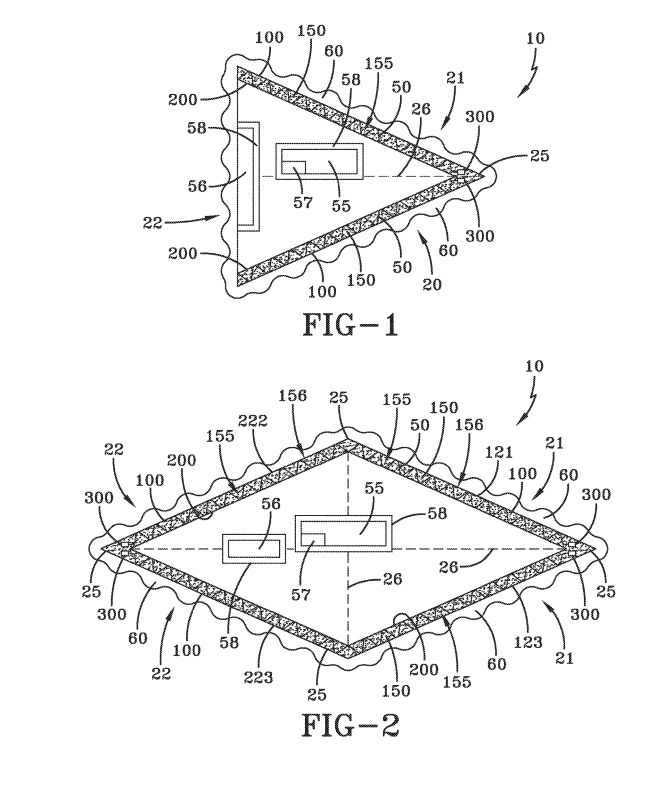
This is the patent that truly launched the internet conspiracy machine.
The invention describes a hybrid aerospace-undersea craft capable of extraordinary speeds by using high-frequency electromagnetic fields to manipulate vacuum energy and reduce inertial mass.
In simpler terms: the vehicle supposedly vibrates a resonant cavity with microwaves until it effectively becomes less affected by inertia.
Casual.
If functional, the technology could theoretically enable:
- Extreme acceleration
- Seamless air-to-water travel
- Reduced aerodynamic resistance
- Advanced propulsion without conventional engines
Or, as the internet prefers to phrase it: “alien spacecraft technology.”
2. Plasma Compression Fusion Device
Patent: US20190295733A1
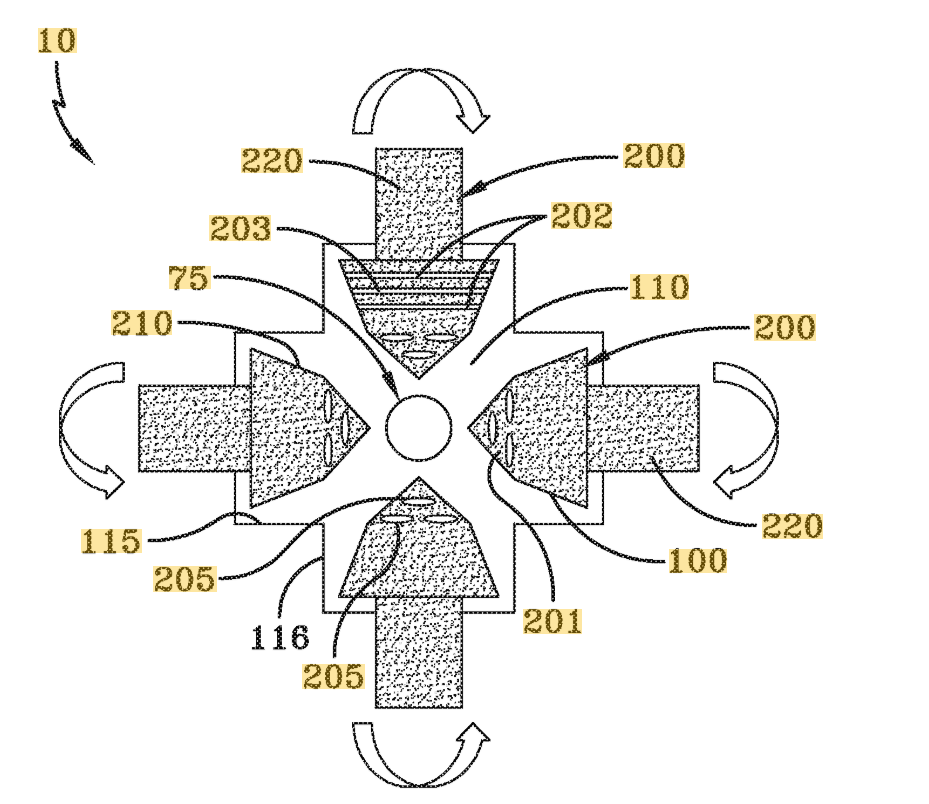
Imagine a compact fusion reactor small enough to fit inside an SUV but powerful enough to generate gigawatts or even terawatts of clean energy.
That’s the promise behind the Plasma Compression Fusion Device.
If such a system actually worked, the implications would be enormous:
- Near-limitless clean energy
- Reduced dependence on fossil fuels
- Revolutionary energy infrastructure
- Potential aerospace and defense applications
It’s the kind of invention that either changes civilization forever or ends up buried in a government archive next to experimental jet packs.
3. High-Frequency Gravitational Wave Generator
Patent: US10322827B2
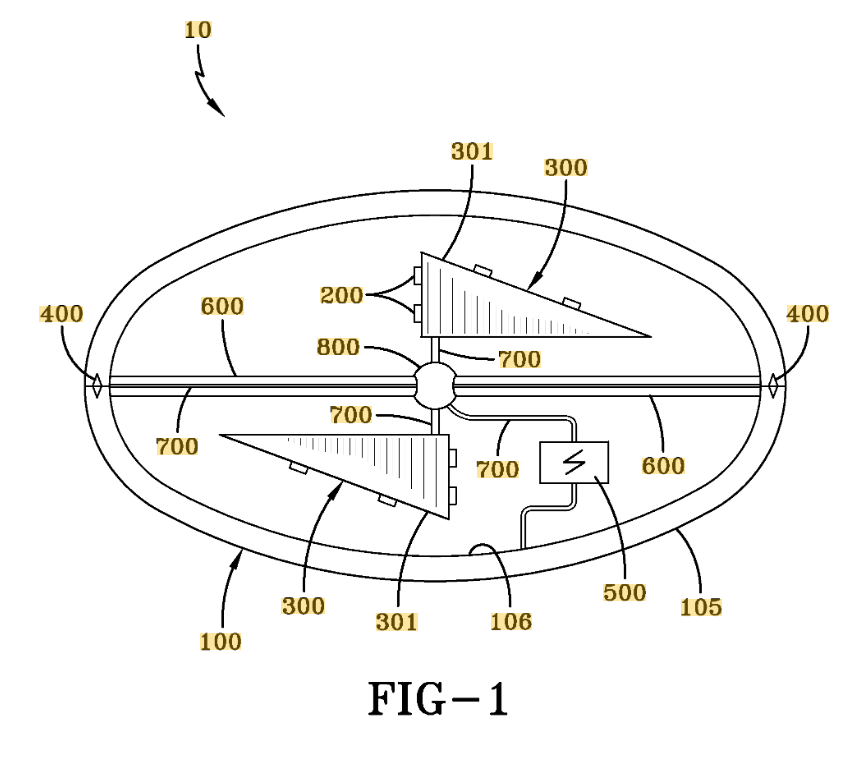
Because apparently manipulating inertia wasn’t ambitious enough.
This patent proposes generating high-frequency gravitational waves using electromagnetic field interactions.
Gravity control has long been considered one of the holy grails of theoretical physics and advanced propulsion research. Whether this patent represents groundbreaking science or highly creative engineering speculation remains heavily debated.
Either way, it’s difficult not to admire the confidence.
4. Room-Temperature Superconductor
Patent: US20190058105A1
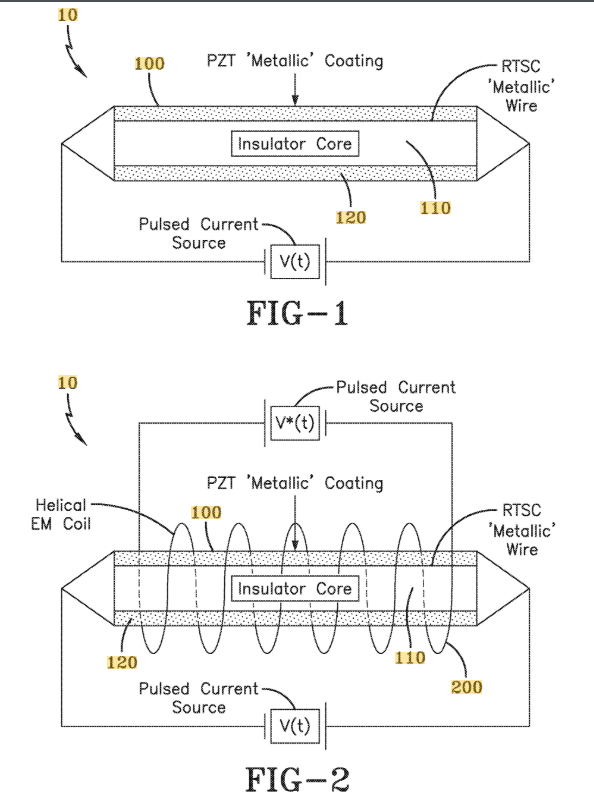
Few concepts excite scientists more than room-temperature superconductivity.
Traditional superconductors require extremely low temperatures to eliminate electrical resistance. A room-temperature superconductor would transform:
- Power grids
- Quantum computing
- Transportation systems
- Medical technologies
- Electronics manufacturing
Pais’ patent suggests a pathway toward achieving superconductivity without extreme cooling requirements.
If validated, it would rank among the most important technological breakthroughs of the century.
No pressure.
Are These UFO Patents Real Technology?
That depends on who you ask.
Skeptics argue that many of the patents rely on theoretical physics that has not been experimentally verified. To date, no publicly known working prototypes have demonstrated the dramatic capabilities described in the filings.
Reports indicate that while the Navy explored aspects of the so-called “Pais Effect,” the concepts were never conclusively validated.
And that’s where things get interesting.
The Conspiracy Theories Practically Write Themselves
My personal favorite theory?
These patents were intentionally filed to distract rival nations into wasting resources chasing impossible technology while the U.S. pursued entirely different classified programs.
Others believe the patents are partially based on reverse-engineered UAP technology.
And some think they’re simply examples of how the patent system occasionally becomes a playground for wildly ambitious ideas.
Honestly, all three explanations are entertaining.
Why UFO Patents Matter to the Intellectual Property World
Beyond the memes and conspiracy theories, these patents highlight something genuinely fascinating about the patent system itself.
Patents are not proof that an invention works.
Instead, they represent legally recognized claims over novel and non-obvious concepts. The patent office evaluates:
- Novelty
- Inventive step
- Patent eligibility
- Disclosure requirements
Not necessarily commercial viability.
That distinction matters.
The same USPTO framework used to patent coffee mugs, mechanical hinges, and smartphone accessories also processed applications involving:
- Gravity manipulation
- Inertial mass reduction
- Fusion energy
- Advanced propulsion systems
It’s a reminder that intellectual property systems are often where imagination meets engineering ambition.
Final Thoughts: Somewhere Between Science and Science Fiction
If even one of these technologies proves viable, it could redefine energy production, aerospace engineering, transportation, and defense strategy.
Unlimited clean power?
Potentially.
Inertia-defying flight?
Maybe.
Gravity as a controllable force?
That would certainly make commuting easier.
Until then, the “UFO patents” remain one of the most fascinating examples of how innovation, speculation, and intellectual property law occasionally collide in spectacular fashion.
Stay curious. Stay skeptical. And maybe keep one eye on the skies, and the other on the USPTO database.