


Search
Close this search box.

Back-to-School Patents

LinkedIn
X
Email

Ah, August. The air turns crisp, the beaches are emptying, and students everywhere realize their summer of “I’ll start the reading list tomorrow” has officially expired…school is starting again.

For students, back-to-school season brings a familiar collection of challenges: finding a backpack, remembering your locker combination, figuring out which teacher gives homework on the first day.  Fortunately for them, inventors are hard at work solving the real problems of student life and patenting those inventions in the dusty halls of the U.S. Patent and Trademark Office.

A Snooze Button that Actually Works

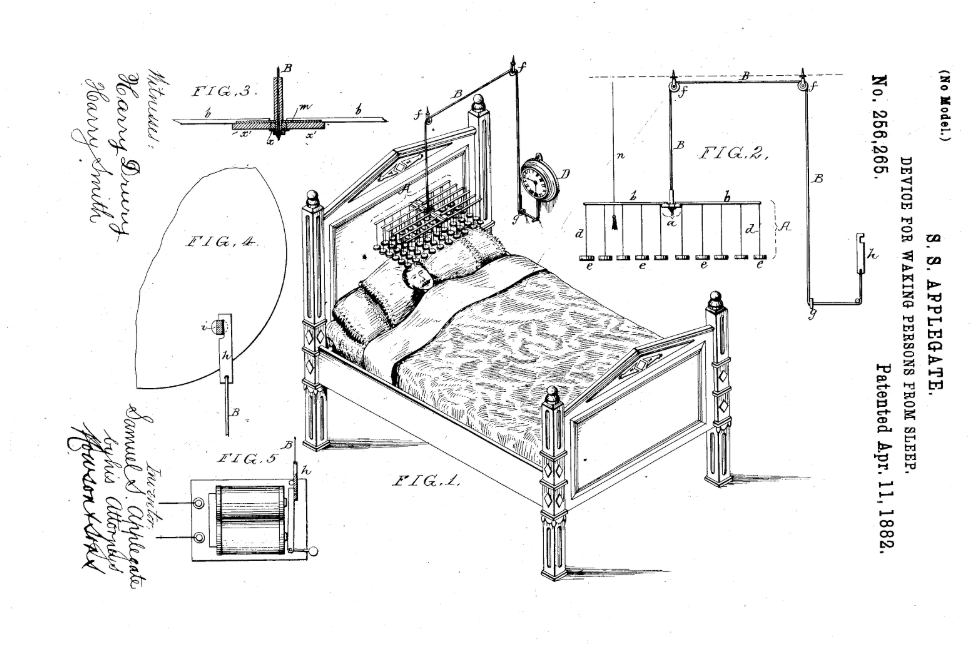
Every student knows the classic alarm clock is a sadist in digital form. Fortunately, inventors have been trying to solve this for over a century. In 1882, Samuel S. Applegate patented a “Device for Waking Persons from Sleep” (U.S. Patent No. 256,265). It suspended a frame of soft wooden or cork blocks above the sleeper’s head. When the alarm rang, the blocks dropped and gently… pummeled you in the face. As the patent helpfully noted, “These cause pain.”

Device for waking persons from sleep
*picture for illustration purposes only. (Click on the image to view the original patent illustrations for technical reference.)

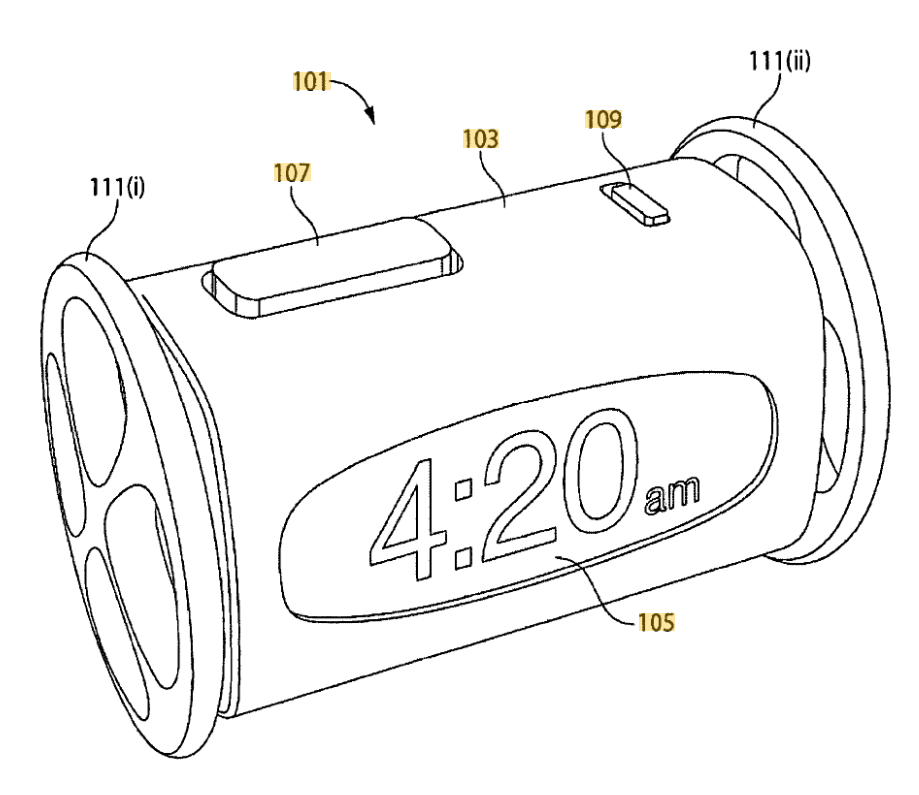
More recently, MIT grad student Gauri Nanda created Clocky (US7355928B2), a wheeled, alarm clock that rolls off the nightstand and hides when you hit snooze. You have to physically get up and hunt it down. Brilliant.

Mobile wakeup device
*picture for illustration purposes only. (Click on the image to view the original patent illustrations for technical reference.)

The Backpack: Portable Chaos, Patented

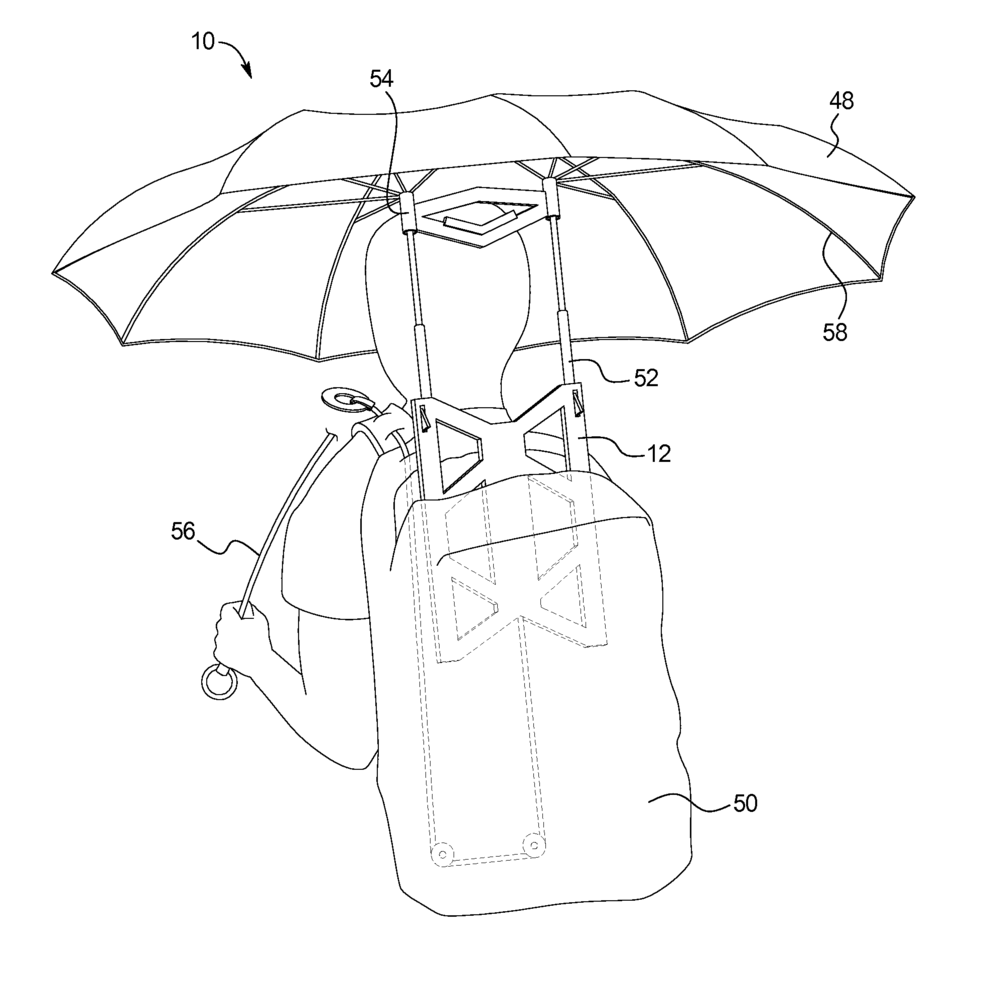
The humble backpack is one of the great technological achievements of civilization. It carries books, notebooks, pencils, snacks, sports equipment, water bottles, and at least one mysterious object that has been living at the bottom since May. But backpacks aren’t simply fabric bags with shoulder straps. Over the years, inventors have patented countless improvements involving compartments, straps, support systems, electronics, charging devices, and other features.  Which makes sense. Students carry more technology today than some NASA missions did in the 1960s. I thought US20130098410A1 was clever in that it provides a means to protect the backpack, the technology and the student from the weather.  We all know that kids don’t check weather reports and are loath to carry an umbrella with them.
Umbrella backpack and deployment mechanism
*picture for illustration purposes only. (Click on the image to view the original patent illustrations for technical reference.)

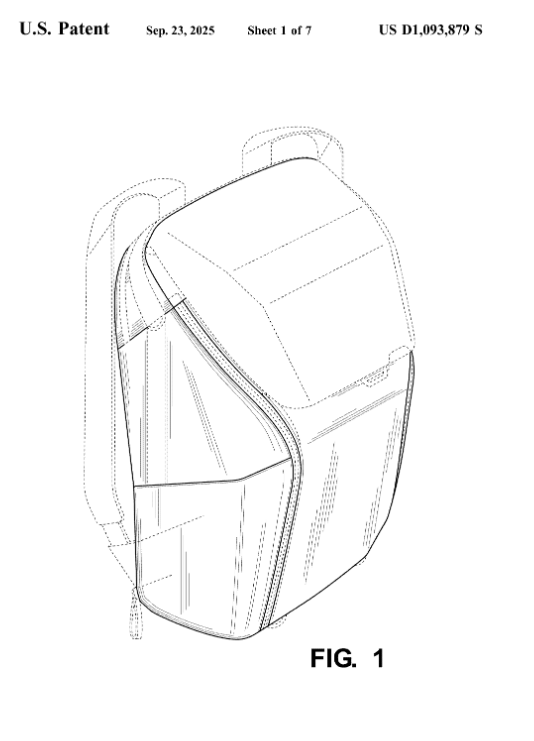
Some students spend a lot of time deciding what their backpacks say about them.  “I’m organized”, “I’m athletic”, “I like science” or “I have not cleaned this backpack since eighth grade.” So naturally there are patents that also cover the ornamental design of a backpack. For example, U.S. Design Patent No. D1,093,879, issued in 2025, contains multiple views of the backpack, including front, back, side, top, bottom, and open configurations. That last (dirty) design probably remains unpatented.

backpack
*picture for illustration purposes only. (Click on the image to view the original patent illustrations for technical reference.)

The Pencil: Tiny Stick, Huge Responsibility

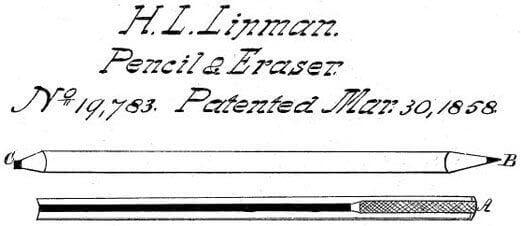
A standard item, guaranteed to appear on almost all back to school lists, is the pencil. It has survived centuries of technological advancement because, unlike many modern devices, it doesn’t need to be charged.  Fortunately, inventors have patented improvements to writing instruments for generations. There are patents covering mechanical pencils, pencil sharpeners, erasers, grips, holders, and countless other variations. My personal favorite improvement (because it helps with my golf game) dates back to March 30, 1868, when Hymen Lipman was granted U.S. Patent No. 19,783 for the first wood-cased pencil with an attached rubber eraser.
Combination of lead pencil & eraser
*picture for illustration purposes only. (Click on the image to view the original patent illustrations for technical reference.)

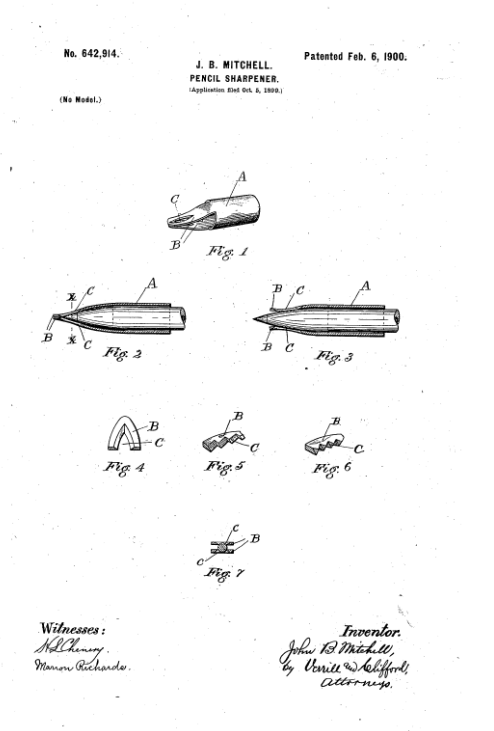
Keeping a pencil useful requires an important piece of technology…the pencil sharpener.  On February 6, 1900, John B. Mitchell of Portland, Maine, received U.S. Patent No. 642,914 for a pencil sharpener. The patent describes a device using spring blades with cutting edges to sharpen a pencil and includes several drawings of the mechanism.

Pencil sharpener
*picture for illustration purposes only. (Click on the image to view the original patent illustrations for technical reference.)

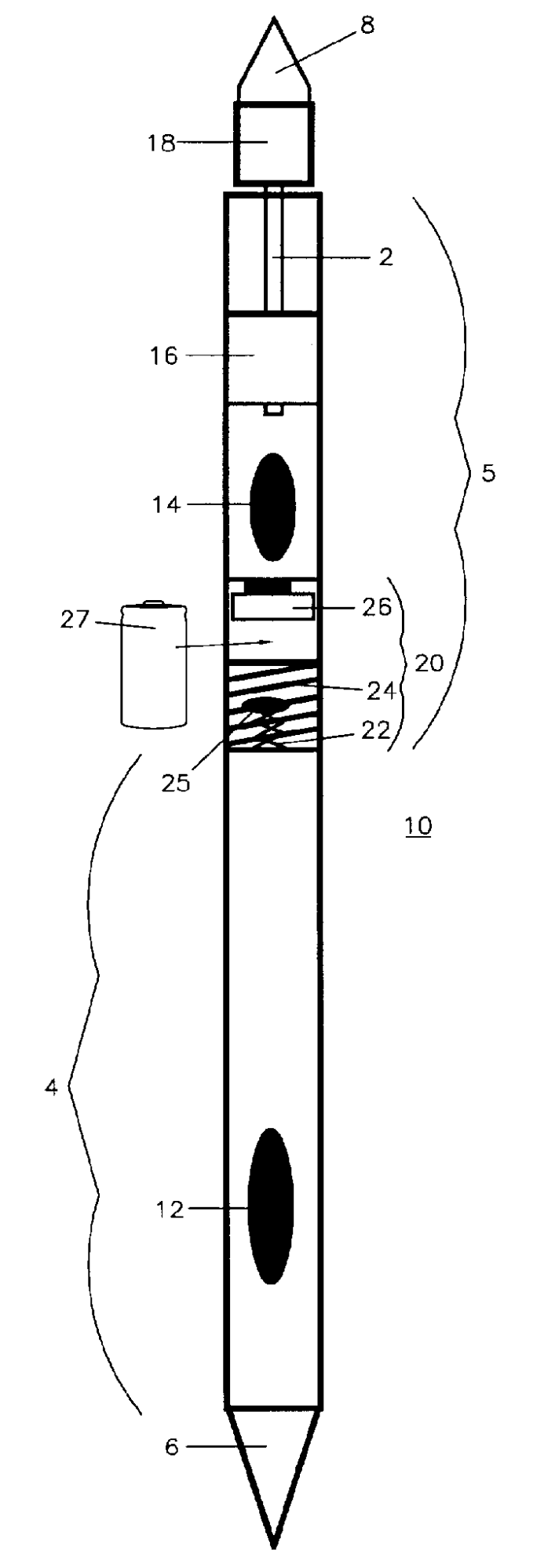
The mechanical pencil is a more recent innovation of the pencil line. Originating in 1791 with Nicholas-Jacques Conte’s screw-advanced lead stick, it gained popularity in the mid-19th century due to improved mechanisms. Now kids think mechanical pencils are way cooler than old-fashioned pencils. But the coolest out there and sure to make the other kids jealous has to be the mechanical pencil with an electric spinning eraser (US20080056806A1).

Mechanical Pencil with Battery Operated Spinning Eraser
*picture for illustration purposes only. (Click on the image to view the original patent illustrations for technical reference.)

Patents exist to protect new and useful inventions. And what could be more useful than technologies that help students survive another school year? Somewhere out there, a future inventor is currently failing a midterm at 3 a.m., eating cold pizza, and thinking, “There has to be a better way.”

That person is going to file the patent that changes everything. So, this fall, as you haul yourself back into classrooms, remember: every inconvenience is just an unpatented invention waiting to happen. Document your suffering. Protect your ideas. And if you invent a legal way to make 8 a.m. classes illegal, please list me as a co-inventor.

Class dismissed. Now go invent something that actually works preferably one that doesn’t hit you in the face with cork.

LinkedIn
X
Email

Have any content requests?

You can let us know at sales@maxval.com

Recent Blog Posts

Subscribe to Our Weekly Newsletter

Join over 30,000 of your Peers! Sign-up for latest IP insights.

Subscribe to Our Weekly Newsletter

Join over 30,000 of your Peers! Sign-up for exclusive content and get the latest IP insights delivered directly to your inbox.

Skip to content